Water damage can turn an ordinary day into a stressful situation. A heavy storm, overflowing drain, broken pipe, or sewage backup can leave a home or business with standing water, damaged flooring, unpleasant odors, and concerns about contamination.
What many property owners don’t realize is that removing visible water is only one part of the cleanup process. Moisture can remain inside walls, beneath flooring, and in other difficult-to-reach areas. When sewage or contaminated floodwater is involved, the situation becomes even more serious.
Professional cleanup helps address both the visible damage and the problems that may remain hidden. From water extraction and surface disinfection to structural drying and contaminated material removal, a proper cleanup process helps protect the property and the people who use it.
Understanding the Different Types of Water Damage
Not every water damage situation carries the same risks. The source of the water plays an important role in determining how the affected area should be cleaned.
Flooding and Stormwater Intrusion
Heavy rainfall, overflowing drainage systems, and severe storms can force water into homes and commercial buildings. Floodwater may carry mud, debris, chemicals, bacteria, and other contaminants.
Even after the water recedes, sediment and moisture can remain trapped in flooring, wall cavities, insulation, and other building materials.
Flood cleanup therefore involves more than simply removing standing water. The affected areas need to be inspected, cleaned, and dried properly.
Sewage Backups and Contaminated Water
A sewage backup is one of the more concerning types of property damage. It can happen when sewer lines become blocked, drainage systems fail, or heavy rainfall overwhelms wastewater infrastructure.
Unlike a clean-water plumbing leak, sewage can contain harmful microorganisms and other contaminants. Contact with contaminated water or surfaces can create health risks.
The CDC advises people to avoid floodwater that may contain sewage and to take appropriate precautions during cleanup.
Professional sewage cleanup may involve:
- Isolating the affected area to limit cross-contamination.
- Removing sewage, wastewater, and contaminated debris.
- Cleaning and disinfecting affected surfaces.
- Removing porous materials that cannot be adequately cleaned.
- Drying the remaining structural materials.
- Managing contaminated waste appropriately.
Plumbing Leaks and Indoor Water Damage
Not all water damage comes from major storms. A leaking supply line, broken appliance connection, overflowing sink, or damaged pipe can release enough water to affect several rooms.
Small leaks can be particularly troublesome because they may continue unnoticed behind cabinets, beneath flooring, or inside walls.
A professional assessment helps identify how far the moisture has spread and whether additional materials need to be removed or dried.
Why Professional Cleanup Matters After Water Damage
A quick cleanup may make a property look better, but appearance alone does not tell you whether the affected areas are safe and completely dry.
Professional cleanup focuses on the entire affected space rather than just the visible water.
1. Identifying Hidden Moisture
Water doesn’t always remain where it first enters a building. It can move beneath floor coverings, travel along wall cavities, and collect around structural materials.
Professional restoration technicians use moisture meters and other inspection equipment to locate damp areas that may not be visible during a normal walkthrough.
Finding these areas early helps determine the actual scope of the damage and reduces the chance of leaving moisture behind.
2. Removing Standing Water
Standing water can continue damaging floors, baseboards, drywall, furniture, and other materials.
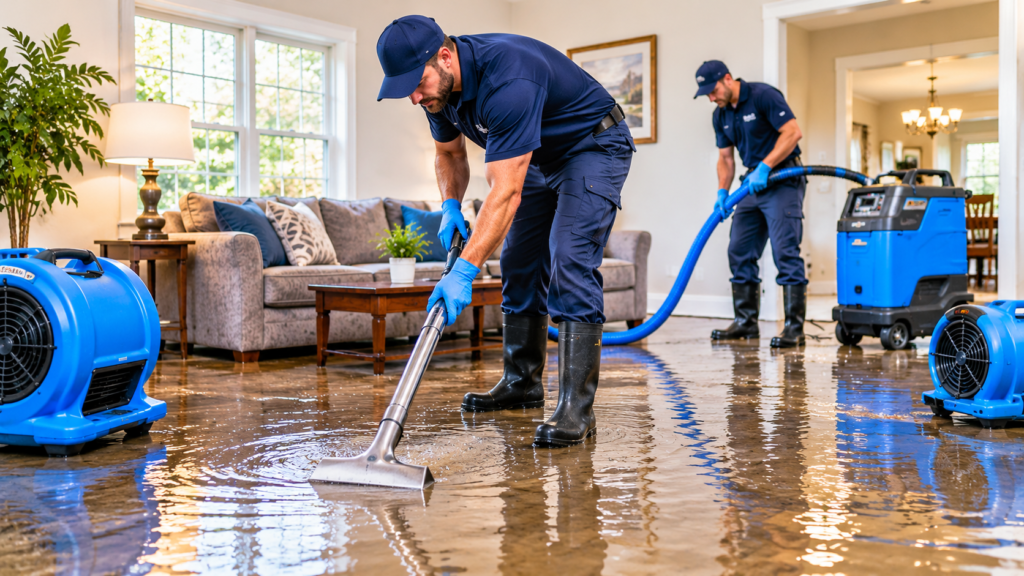
Professional extraction equipment is designed to remove water more efficiently than ordinary household cleaning equipment.
Removing accumulated water is an important first step before cleaning and structural drying can begin.
3. Cleaning and Disinfecting Contaminated Areas
Floodwater and sewage require particular attention because visible dirt is not the only concern.
Professional cleanup involves selecting suitable cleaning and disinfection methods for the source of contamination and the affected materials.
Surfaces must be physically cleaned before appropriate disinfectants are applied. Simply spraying a product over contaminated dirt does not provide a complete cleanup.
4. Drying Walls, Floors, and Structural Materials
One of the most important stages of water damage restoration is structural drying.
Even after standing water has been removed, moisture may remain inside flooring, drywall, wooden structures, and other materials.
Professional drying commonly involves commercial air movers, dehumidifiers, and ongoing moisture measurements.
Technicians monitor the affected materials and adjust the drying process based on the property’s condition rather than relying on a fixed drying schedule.
5. Reducing the Risk of Mold Growth
Damp building materials create conditions that can support mold growth.
Mold may develop behind furniture, beneath carpets, around baseboards, and inside wall cavities when moisture remains.
Cleaning and drying affected areas promptly helps reduce the likelihood of a secondary mold problem. Materials that cannot be adequately cleaned or dried may need to be removed and replaced.
What Happens During a Professional Cleanup Process?
Although every property is different, a professional cleanup generally follows several important stages.
Initial Inspection and Damage Assessment
The first step is understanding where the water came from, how much of the property is affected, and whether contamination is present.
Technicians assess visible damage, inspect surrounding areas, and identify materials that may need specialized treatment.
Water Extraction and Debris Removal
Once the affected areas have been assessed and appropriate safety precautions are in place, standing water and damaged debris are removed.
For sewage-related incidents, contaminated materials must be handled and disposed of using appropriate procedures.
Cleaning and Decontamination
Affected surfaces are cleaned using methods appropriate for the type of water involved.
When contamination is present, the cleanup may require controlled work areas, protective equipment, and suitable disinfectants to reduce the risk of spreading contaminants into unaffected spaces.
Structural Drying and Moisture Monitoring
After extraction and cleaning, drying equipment is positioned throughout the affected areas.
Moisture readings help technicians determine whether walls, floors, and other materials are drying as expected. Equipment adjustments may be necessary as conditions change.
Final Inspection and Restoration Planning
Before repairs begin, the affected areas should be checked for remaining moisture and unresolved contamination.
Depending on the extent of the damage, the next steps may include replacing drywall, repairing flooring, reinstalling insulation, or coordinating additional restoration work.
Why DIY Cleanup Isn’t Always Enough
For a small, clean-water spill on a hard surface, ordinary household cleaning may be sufficient.
However, larger water damage events are different. Household vacuums, fans, and cleaning products cannot always address moisture trapped inside building materials or contamination caused by sewage and floodwater.
There are also electrical and structural hazards to consider. Entering a flooded building before it has been determined safe can put occupants at risk.
The CDC recommends taking precautions when returning to flood-damaged properties, particularly where sewage contamination or damaged utilities may be present.
If water has entered electrical areas, if the source is sewage, or if the building has significant flooding, avoid attempting cleanup without appropriate professional assistance.
When Should You Call a Professional Cleanup Company?
Consider professional assistance when:
- Floodwater has entered multiple rooms.
- Sewage is backing up through toilets, drains, or floor openings.
- Water has reached carpets, drywall, insulation, or subflooring.
- A plumbing leak has remained undetected for an extended period.
- Strong musty odors develop after a water intrusion event.
- You suspect moisture is trapped behind walls or beneath flooring.
- The affected property contains potentially contaminated materials.
Early assessment can help prevent a manageable water damage problem from becoming a much larger restoration project.
Choosing the Right Cleanup and Restoration Provider
Not every cleaning company is equipped to handle every type of water damage.
Before hiring a provider, ask whether they have experience with the specific source of damage, what equipment they use, how they handle contaminated materials, and whether they monitor moisture during the drying process.
For sewage or other biohazard-related incidents, ask about technician training, protective equipment, containment procedures, and appropriate waste disposal.
It is also helpful to understand what the service includes. Water extraction, biohazard decontamination, structural drying, and reconstruction are different parts of the recovery process and may require different expertise.
For property owners in Southwest Louisiana who need assistance with water-related property damage, Lake Charles water damage restoration services provide support for emergency water removal, flood cleanup, structural drying, mold remediation, and sewage cleanup in Lake Charles and surrounding communities.
Protecting Your Property After a Water Damage Event
Water damage recovery is not just about making a property look clean again. The affected areas need to be assessed, contaminated materials handled appropriately, and remaining moisture addressed before repairs are completed.
Whether the problem comes from storm flooding, a sewage backup, or a plumbing failure, the right cleanup process can make a significant difference in protecting the property and limiting additional damage.
At Hazard Cleanup Phoenix, professional biohazard and contaminated-water cleanup is focused on addressing hazardous conditions with appropriate safety procedures and thorough remediation.
For additional safety information, property owners can also review the CDC’s floodwater safety guidelines.
Leave a Reply