
A burst pipe at 2 a.m. A failed water heater. A storm that pushes water through the basement wall. Water damage never arrives at a convenient time, and when it does, you are under pressure to hire someone fast.
That pressure is exactly why homeowners and property managers end up with the wrong company: one that shows up late, cuts corners on drying, or pads the bill. The good news is that you can tell a trustworthy water damage restoration company from a risky one with a few focused questions, whether you live in Phoenix, Akron, or anywhere in between.
This guide walks you through exactly how to vet a restoration company before you sign anything.
Why Choosing the Right Restoration Company Matters
Water damage is a race against time. Within hours, moisture soaks into drywall, insulation, subfloors and furniture. Within 24 to 48 hours, mold can begin to grow in warm, damp conditions. A slow or sloppy response does not just cost more. It can leave hidden moisture behind walls that turns into structural damage, health problems and failed insurance claims later.
A qualified company stops the water, dries the structure properly, documents everything and restores your property to a safe condition. An unqualified one may only dry what you can see.
1. Confirm Licenses and Insurance
Start with the basics. Requirements vary by state and city, so ask what licenses the company holds for your area and ask to see proof.
- Business license: Confirms the company is a registered, legitimate operation.
- General liability insurance: Protects your property if the crew accidentally causes damage.
- Workers’ compensation: Protects you from liability if a technician is injured on your property.
A reputable company will share this paperwork without hesitation. If they dodge the question, move on.
2. Look for IICRC Certification
The Institute of Inspection, Cleaning and Restoration Certification (IICRC) sets the recognized industry standards for water damage restoration, including the S500 standard. Ask whether the company and its technicians hold current IICRC certifications such as Water Damage Restoration Technician (WRT) or Applied Structural Drying (ASD).
You can learn more about these standards, or look up certified firms, at the IICRC website. Certification shows that technicians are trained in proper drying science instead of guesswork.
3. Ask About Response Time and 24/7 Availability
Water damage does not wait for business hours. A good company offers true 24/7 emergency service and can tell you how quickly they typically arrive. Be careful with vague promises like “we’ll be there soon.” Ask for a specific window, and ask whether the person answering the phone is a real dispatcher or just an answering service.
4. Check That They Use Professional Equipment
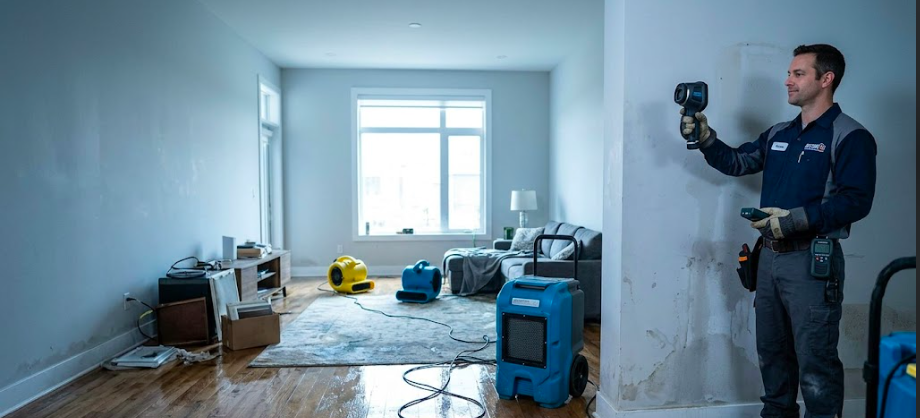
Fans and a few towels are not restoration. A professional crew should arrive with:
- Moisture meters: to measure hidden water in walls and floors
- Thermal imaging cameras: to locate moisture you cannot see
- Commercial dehumidifiers and air movers: sized for your space
- Extraction equipment: to remove standing water quickly
Ask how they will monitor progress. A reliable company checks moisture readings daily and only removes equipment once the structure is verified dry.
5. Get a Written, Itemized Estimate
Never rely on a verbal quote. A trustworthy estimate should be written and should break down labor, equipment, materials and any anticipated demolition. Be wary of anyone who:
- Quotes a price over the phone without seeing the damage
- Refuses to put the estimate in writing
- Demands full payment upfront
- Pressures you to sign immediately
Understand that scope can change once demolition reveals hidden damage. A good company explains this up front and tells you before additional work begins.
6. Ask How They Handle Insurance Claims
Most water damage is handled through homeowners or commercial property insurance. Experienced restoration companies understand the claims process and will provide moisture logs, photos and itemized documentation your adjuster needs. Ask whether they communicate directly with your insurer and how they document the loss.
Be cautious of any company that promises your claim will be approved. No contractor controls that decision.
7. Read Reviews and Ask for References
Look at Google reviews, Better Business Bureau records and local referrals. Do not just count stars. Read how the company responds to complaints, and look for patterns around communication, timeliness and billing. For larger jobs, ask for two or three recent references you can call.
8. Understand the Full Scope of Services
Water damage rarely stops at water. Ask whether the company can handle everything you may need, including:
- Water extraction and structural drying
- Mold testing and remediation
- Odor control and sanitization
- Contents cleaning and pack-out
- Rebuild and repair work
A single provider that handles the process end to end means fewer handoffs and fewer delays.
Red Flags to Walk Away From
- No physical address or local presence
- Unmarked vehicles and no company branding
- Door-to-door solicitation after a storm
- Pressure to sign a contract on the spot
- No written scope of work
- Refusal to show licenses, insurance or certifications
Quick Vetting Checklist
Before you hire, make sure you can say yes to each of these:
- Are they licensed and insured for my area?
- Do they hold current IICRC certifications?
- Do they offer 24/7 emergency response with a clear arrival time?
- Do they use moisture meters, thermal imaging and commercial drying equipment?
- Did I get a written, itemized estimate?
- Will they document everything for my insurance claim?
- Do their reviews and references check out?
Searching Outside Your Area?
These same questions apply no matter where the loss happens. If you have a property in Northeast Ohio or are helping a family member there, a local provider offering water damage restoration in Akron is a good example of the kind of dedicated, region-specific service to look for. The goal is always a local team that can respond quickly and knows the climate and building conditions in your area.
Final Thoughts
Choosing a water damage restoration company is a decision you will probably make under stress, so make the checklist before you need it. Verify credentials, insist on written estimates, and prioritize companies that respond fast and dry the job correctly the first time.
Dealing with water, mold or other property hazards? Visit Hazard Cleanup Phoenix to learn how our team can help you get your property back to safe, normal conditions.
FAQ
How quickly should a water damage company respond? Ideally within a few hours of your call. Mold can begin to develop within 24 to 48 hours, so fast response matters.
How much does water damage restoration cost? It depends on the source of water, the area affected and how long water sat. Always request a written, itemized estimate after an on-site inspection.
Should I call my insurance company or the restoration company first? Call both as soon as it is safe. Many restoration companies can start emergency mitigation immediately and document the loss for your claim.
Does insurance cover water damage? Coverage depends on your policy and the cause of the damage. Sudden events like a burst pipe are often covered, while gradual leaks or flooding may need separate coverage. Check your policy or ask your agent.
Leave a Reply