
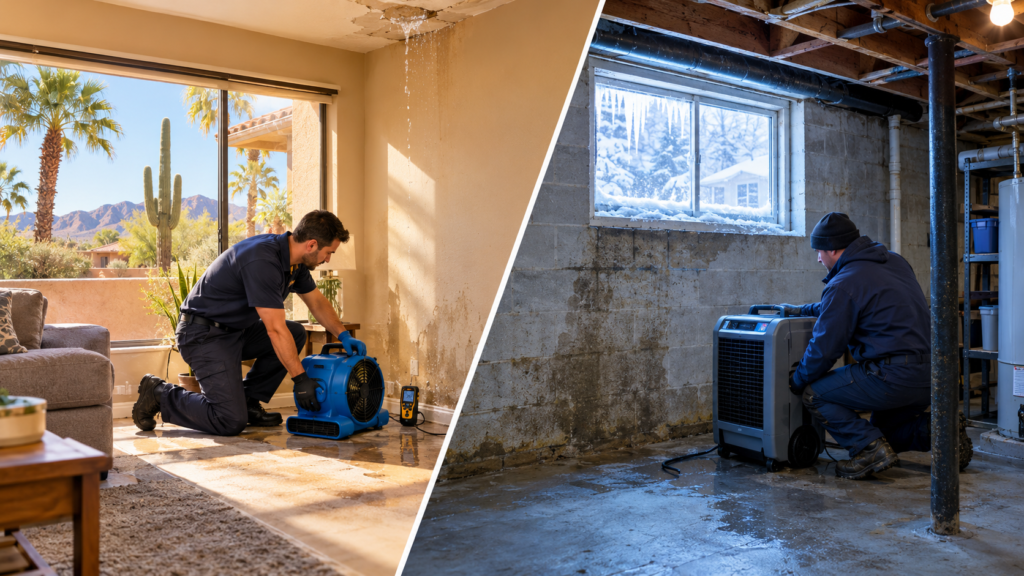
Water damage is water damage, right? Not quite. The same flooded room can call for a very different restoration plan depending on where it happens. A burst pipe in a Phoenix stucco home and a burst pipe in an Ohio basement start with the same problem, but the causes, the drying conditions, and the long-term risks are not the same.
If you live in the Valley of the Sun, understanding these differences helps you act faster and avoid costly mistakes. Here’s how water damage in Phoenix compares with water damage in cold-climate cities, and why local experience matters when you hire a restoration company.
Why Water Damage Happens in the First Place
Phoenix: Heat, Monsoons, and Aging Systems
Most people don’t associate the desert with water damage, but Phoenix homes deal with it all the time. Common causes include:
- AC system failures: Air conditioners run for much of the year in Arizona. Clogged condensate drain lines, failed drain pans, and leaking evaporator coils are among the most common sources of ceiling and wall damage.
- Monsoon storms: From mid-June through September, sudden downpours and flash flooding can overwhelm drainage, push water under doors, and expose roof weaknesses.
- Water heater and appliance leaks: Hard water can contribute to mineral buildup and corrosion, which shortens the life of water heaters, supply lines, and fixtures.
- Slab leaks and plumbing failures: Many Phoenix homes are built on concrete slabs, so leaking pipes can hide beneath the floor for a long time before anyone notices.
- Roof leaks: Intense sun and heat wear down roofing materials, and a monsoon storm often reveals the damage.
Cold-Climate Cities: Freezing, Thawing, and Snow
In places like Akron, Ohio, winter drives much of the water damage:
- Frozen and burst pipes: When water freezes inside a pipe, it expands and can split the pipe. The real flooding often starts when things thaw.
- Ice dams: Melting snow refreezes at the roof edge, backs up under shingles, and leaks into attics and ceilings.
- Snowmelt and basement flooding: Spring thaws combined with heavy rain can saturate the ground and push water into basements and crawl spaces.
- Sump pump failure: A basement that stays dry most of the year can flood quickly when a pump fails during a storm.
How Drying Conditions Change the Restoration Process
Drying is the heart of water damage restoration, and climate affects it more than almost anything else.
Phoenix: Fast Evaporation, Hidden Moisture
Phoenix’s low outdoor humidity can make surface water disappear quickly. That sounds like good news, but it can create a false sense of security. Surfaces may feel dry while moisture stays trapped in:
- Wall cavities and insulation
- Subfloors and under flooring
- Behind cabinets and baseboards
- Beneath tile and slab-adjacent areas
Because homes here are sealed tightly and air-conditioned, indoor humidity can also stay higher than the dry outdoor air suggests, especially after a leak. Professionals use moisture meters and thermal imaging to find moisture that can’t be seen, rather than relying on how a surface looks or feels.
Restoration crews in Phoenix also have to think about heat. High indoor temperatures can speed up drying, but they also affect how equipment is set up and how long materials can safely stay wet.
Cold-Climate Cities: Slow Drying and High Humidity
In colder, more humid regions, the challenge is often the opposite. Cold air holds less moisture, but damp basements, wet insulation, and long stretches of cool weather slow drying considerably. Restoration crews often need to:
- Run heaters along with dehumidifiers to bring drying conditions into a workable range
- Dry out basements and crawl spaces that stay cool and damp
- Address frozen or water-logged building materials that dry slowly
- Plan for longer drying timelines in some cases
Mold: A Risk in Both Climates, for Different Reasons
A common myth is that mold isn’t a concern in the desert. In reality, mold needs moisture, not a wet climate. A hidden AC leak inside a wall can create ideal conditions for mold within a short time, even when it’s bone-dry outside.
In cold-climate cities, mold tends to show up in basements, attics affected by ice dams, and areas where condensation and slow drying go unnoticed.
In both cases, the best defense is the same: remove standing water quickly, dry structural materials thoroughly, and have a professional confirm the moisture is actually gone.
Building Materials Matter Too
Construction styles differ by region, and so do restoration methods:
- Phoenix homes – often feature stucco exteriors, tile flooring, slab foundations, and attic-mounted HVAC systems. That means attention to ceiling damage from AC leaks, wet tile and underlayment, and slab-related plumbing.
- Cold-climate homes – often have basements, crawl spaces, and heavy insulation, which means more focus on below-grade moisture, wet insulation, and freeze damage to plumbing in exterior walls.
A restoration team that knows the local building styles will find problems faster and avoid unnecessary demolition.
What to Do First, Wherever You Live
No matter the climate, these first steps help limit the damage:
- Stop the source if it’s safe: shut off the main water valve or the affected appliance.
- Protect your safety. Avoid standing water near electrical outlets or appliances, and turn off power to affected areas if needed.
- Remove valuables and move furniture out of the wet area.
- Document the damage with photos and video for your insurance claim.
- Call a professional restoration company quickly. Water spreads and damage worsens with every hour.
Why Local Expertise Makes a Difference
A restoration company that understands the local climate, building styles, and common failure points can diagnose damage more accurately and plan a faster, more complete recovery. In the Phoenix area, that means experience with AC-related leaks, monsoon flooding, slab issues, and the hidden moisture that dry desert air can mask.
If you need help right away, Hazard Cleanup Phoenix is ready to help Valley homeowners and businesses recover from water damage and get back to normal.
Looking at how restoration works in a colder region? Companies like water damage restoration in Akron deal daily with frozen pipes, ice dams, and basement flooding, which shows how much local conditions shape the work. Homeowners comparing climates can also find helpful water damage resources from Akron Water Damage for a closer look at cold-climate restoration services.
Final Thoughts
Water damage looks different in the desert than it does in a northern winter, but the stakes are the same: act fast, dry thoroughly, and rely on professionals who understand your local conditions. Whether the culprit is a failed AC drain line in Phoenix or a burst pipe in Akron, quick action protects your home, your health, and your wallet.
Leave a Reply