
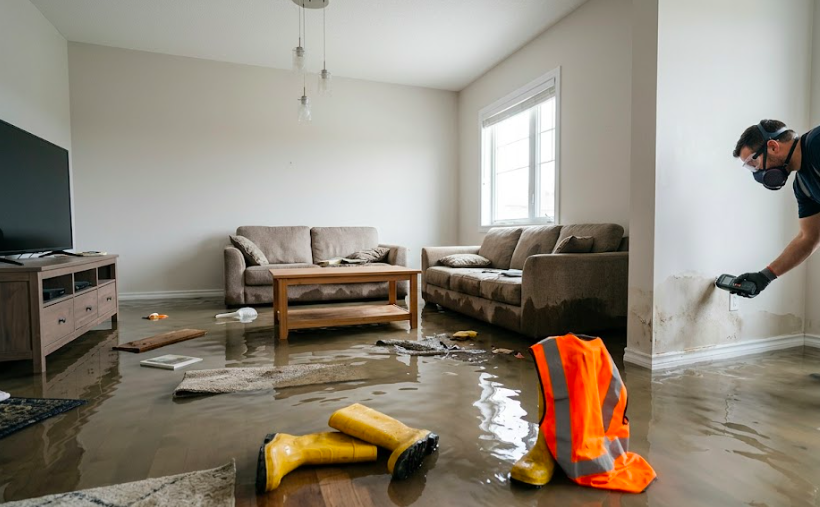
A flooded home is overwhelming. Between the stress, the mess, and the pressure to act fast, it’s easy to overlook the hazards hiding in standing water, soaked materials, and damaged wiring. In Arizona, monsoon storms, burst pipes, and failed water heaters can flood a house in minutes, and the cleanup is rarely as simple as grabbing a mop.
This checklist walks you through each area of your home so you can work safely, protect your health, and know when to bring in a professional. If you’re dealing with a large or contaminated loss, our team at Hazard Cleanup Phoenix is always available to help.
Before You Enter: Whole-House Safety Rules
Do these steps before you touch anything:
- Shut off the electricity at the main breaker if you can reach it without stepping through water. If the panel is wet or the area is flooded, do not go near it. Call your utility company or an electrician.
- Turn off the water supply at the main shutoff valve if the flood came from a plumbing failure.
- Wear protective gear waterproof boots, rubber gloves, safety goggles, and an N95 respirator at minimum.
- Assume floodwater is contaminated. Water from storms, sewers, or appliances can carry bacteria, chemicals, and debris.
- Document everything Take photos and video of the damage before you move or discard anything. You’ll need them for your insurance claim.
Room-by-Room Checklist
Kitchen
- Unplug appliances only if the outlet and floor are dry. Never touch plugged-in appliances while standing in water.
- Throw away any food, drinks, or medications that touched floodwater, including sealed containers and cans with damaged seals.
- Sanitize countertops, cabinet interiors, and any dishes or utensils that were exposed. Wash them in hot, soapy water, then disinfect.
- Check for swelling in particleboard cabinets. These materials rarely dry out fully and often need to be replaced.
Bathrooms
- Treat any bathroom flood as potentially contaminated, especially if a toilet or drain backed up.
- Do not use sinks, toilets, or showers until you know your plumbing and sewer lines are working.
- Remove wet rugs, towels, and bath mats right away.
- Disinfect all hard surfaces, including the floor, tub, and walls.
- If sewage entered the home, stop and call a professional. Sewage cleanup is a health hazard.
Living Rooms and Bedrooms
- Carpet and padding: Carpet soaked by contaminated water should be removed. Padding almost always needs to be replaced.
- Upholstered furniture and mattresses: These absorb water and bacteria and are very hard to fully decontaminate. Most should be discarded.
- Solid wood furniture: Wipe it down, move it to a dry area, and let it dry slowly.
- Electronics: Do not turn on any device that got wet. Have it checked by a technician first.
Walls, Drywall, and Insulation
- Drywall wicks water upward, so damage often extends higher than the visible waterline.
- Wet drywall and insulation may need to be cut out and replaced, often a foot or more above the waterline.
- Look for bubbling paint, warping, discoloration, or a musty smell, which are signs of hidden moisture.
- Open wall cavities where possible to speed drying.
Basement, Crawl Space, and Garage
- Do not enter a flooded basement until the power is off and you’ve confirmed the structure is safe.
- Pump water out gradually. Removing it too quickly can put pressure on walls and floors.
- Check for gas smells near water heaters and furnaces. If you smell gas, leave immediately and call the gas company.
- Move stored chemicals, paint, and fuel to a safe, ventilated area. These can leak or mix with floodwater.
Attic and Ceilings
- Water often travels from above. A sagging ceiling may be holding a large amount of water and can collapse.
- Do not stand under a bulging ceiling. Puncture it only if it’s safe to do so, with a bucket to catch the water.
- Check insulation and roof decking for moisture and signs of leaks.
Watch for Mold
Mold can begin growing within 24 to 48 hours in damp conditions. Dry the home as quickly as possible with fans, dehumidifiers, and open windows when the weather allows. The EPA’s guide to mold, moisture, and your home is a useful reference for how to prevent growth and when cleanup requires professional help.
Signs mold may already be present:
- A musty or earthy odor
- Visible black, green, or white spots
- Allergy-like symptoms such as sneezing, coughing, or irritated eyes
What Not to Do
- Don’t use household fans to dry a sewage-contaminated area, since they can spread airborne contaminants.
- Don’t mix cleaning chemicals, especially bleach and ammonia, which create toxic fumes.
- Don’t keep porous materials like carpet, mattresses, or ceiling tiles that were soaked by dirty water.
- Don’t delay. Every hour of standing water increases damage and health risk.
When to Call a Professional
Some situations are too risky or too large for DIY cleanup. Call a licensed restoration company if:
- Floodwater contains sewage or came from outside the home
- The affected area is larger than a small room
- You see mold covering more than a few square feet
- Electrical systems, gas lines, or the structure may be compromised
- Your insurance company requires professional documentation
Professionals use moisture meters, thermal imaging, and industrial drying equipment to find and remove hidden water that you can’t see. For flood response planning, Ready.gov’s flood guidance is also worth bookmarking.
Water damage isn’t limited to Arizona. If you have family or a rental property in Ohio and need help there, a local provider offering water damage restoration in Akron can handle emergency extraction, drying, and repairs for homes and businesses across the area.
Final Thoughts
Flood cleanup comes down to three priorities: safety first, document everything, and dry fast. Work through this checklist room by room, and don’t hesitate to get expert help when the job involves contamination, structural concerns, or large-scale water damage.
If your Phoenix-area home has been flooded, contact Hazard Cleanup Phoenix for fast, professional help.
Leave a Reply