
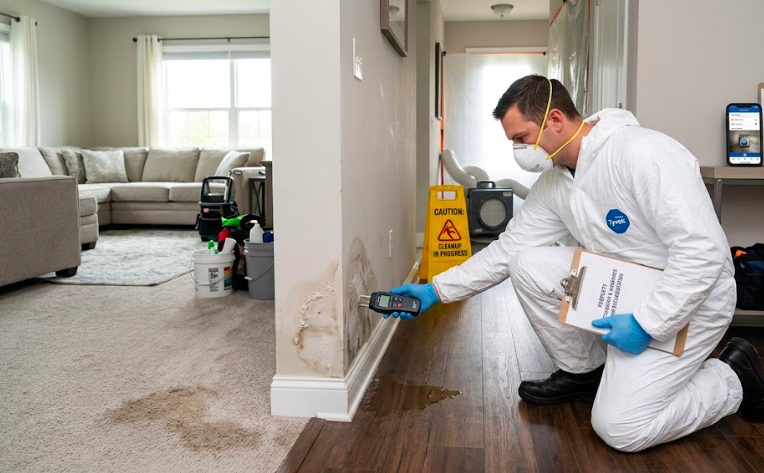
After an unexpected disaster whether it’s a traumatic incident, a burst pipe, or a hidden mold colony behind your drywall one of the first questions Phoenix homeowners ask is: “Will my insurance pay for this?” The answer is rarely simple. Homeowners insurance policies are full of nuances, exclusions, and conditions that can mean the difference between a covered claim and a five-figure out-of-pocket bill.
In this guide, the licensed professionals at Hazard Cleanup Phoenix break down exactly what standard homeowners insurance covers and what it doesn’t when it comes to biohazard remediation, water damage restoration, and mold removal.
Need immediate help? Visit our Hazard Cleanup Phoenix homepage for 24/7 emergency biohazard, water damage, and mold remediation services across the Phoenix Metro area.
Table of Contents
- How Homeowners Insurance Works for Cleanup Claims
- Biohazard Cleanup: What’s Covered?
- Water Damage Restoration: Covered or Not?
- Mold Remediation: The Coverage Gray Zone
- Quick Reference Coverage Table
- How to Maximize Your Insurance Claim
- FAQs
- Final Thoughts
1. How Homeowners Insurance Works for Cleanup Claims
Standard homeowners insurance (HO-3 policies, the most common type) covers your home against sudden and accidental perils think fire, lightning, and vandalism. When a covered peril causes a mess, your policy typically pays for both the structural repair and the cleanup needed to make the property safe again.
However, damage that is gradual, preventable, or the result of neglect is almost always excluded. This distinction is the root of most insurance disputes in the cleanup industry.
Key Term: “Covered Peril”A covered peril is a specific event listed in your policy that triggers coverage. Always check your declarations page and the policy exclusions section not just the marketing summary before assuming something is covered.
2. Biohazard Cleanup: What’s Covered?
Biohazard cleanup encompasses a wide range of scenarios: trauma scenes, unattended deaths, crime scenes, sewage backups, and hoarding cleanup. Each situation interacts differently with a homeowners policy.
Trauma & Crime Scene Cleanup
If a traumatic event such as an accidental death, suicide, or violent crime occurs inside your home, the resulting biological contamination (blood, bodily fluids, tissue) is considered a biohazard requiring professional decontamination. Many standard HO-3 policies do cover this type of cleanup because the event itself (vandalism, sudden death) is a covered peril. However, coverage limits can be low some policies cap biohazard cleanup at $5,000 to $10,000, which may not fully cover the cost of a severe trauma scene.
Important Note: Some insurers treat trauma cleanup as a “loss of use” or “additional living expense” scenario, while others classify it under property damage. How your adjuster categorizes the claim significantly affects your payout. Always ask your insurer to specify the line item.
Unattended Deaths
An undiscovered death where decomposition has begun is one of the most challenging and costly biohazard remediation scenarios. Coverage is similar to trauma cleanup, but because decomposition can penetrate subflooring, walls, and HVAC systems, costs frequently exceed standard policy limits. A pollution liability rider or a dedicated biohazard cleanup endorsement can extend your coverage significantly.
Sewage Backup
Sewage is classified as a biohazard because it contains harmful bacteria and pathogens. Standard homeowners policies typically exclude sewer and drain backup unless you have added a specific water backup endorsement (usually $50–$250/year). Without this rider, you will likely be paying for sewage remediation out of pocket which can run $3,000 to $25,000+ depending on the extent of the damage.
- Check your policy for “water backup and sump overflow” language
- Add a sewer backup endorsement if you don’t have one
- Document all visible contamination before cleanup begins
- Hire a certified biohazard remediation company insurers may deny claims handled improperly
3. Water Damage Restoration: Covered or Not?
Water damage is the most common homeowners insurance claim in the United States, yet it’s also among the most frequently disputed. The coverage hinges almost entirely on the source and speed of the water intrusion.
Typically Covered
- Burst pipes due to sudden freezing or accidental rupture
- Water damage from firefighting efforts
- Accidental overflow from appliances (washing machine, dishwasher)
- Roof damage from storm causing interior water intrusion
- Ice dam damage (in most northern states; less relevant in Phoenix but worth noting)
Typically NOT Covered
- Flooding from outside (requires separate NFIP or private flood insurance)
- Gradual leaks (slow drip under a sink that damages cabinets over months)
- Groundwater seepage through foundation walls
- Water damage resulting from lack of maintenance
- Sewer or drain backup (unless you have a rider — see above)
Phoenix-Specific Note: Monsoon Flooding-Phoenix experiences intense monsoon storms from June through September. Flooding caused by monsoon rainfall isnot coveredby standard homeowners insurance it requires a separate flood policy. If your home has experienced monsoon-related water damage, contact a flood insurance specialist immediately.
For homeowners in neighboring states and regions dealing with severe water intrusion, professional restoration services are critical to prevent secondary damage and mold growth. Our colleagues at McAllen TX Water Damage provide expert water damage restoration services throughout the Rio Grande Valley a trusted resource for residents seeking certified, insurance-friendly restoration professionals outside the Phoenix area.
4. Mold Remediation: The Coverage Gray Zone
Mold is where homeowners insurance gets most contentious. Mold grows as a consequence of moisture and since moisture itself is often tied to gradual neglect, insurers frequently deny mold claims on the grounds that the underlying water damage wasn’t covered or wasn’t addressed promptly.
When Mold Remediation IS Covered
If mold results directly from a covered peril for example, a sudden pipe burst that was remediated promptly but left residual moisture that caused mold growth most policies will cover the mold remediation as an extension of that covered claim. The key factors are:
- Mold must result from a covered peril (not neglect or gradual leaks)
- You must have acted promptly to mitigate the original damage
- Remediation must be performed by a licensed, certified professional
- You must document everything: photos, moisture readings, invoices
When Mold Remediation is NOT Covered
- Mold from long-term humidity issues (poor ventilation, HVAC neglect)
- Mold from a gradual leak the homeowner failed to repair
- Pre-existing mold discovered during a home inspection or sale
- Mold in homes that were vacant or unoccupied for extended periods
Arizona Mold Risk is Real-Despite Phoenix’s dry climate, mold is a serious concern particularly in bathrooms, kitchens, under sinks, around AC units, and in any area with poor ventilation. Arizona’s monsoon season introduces sudden moisture that, if not dried within 24–48 hours, creates ideal mold conditions. Don’t assume the desert climate protects you.
Many homeowners are surprised to discover that their policy includes a separate, lower sublimit for mold often $5,000 to $15,000 far below the actual cost of professional mold remediation in a significantly affected home. You can purchase a mold remediation endorsement to increase this limit.
5. Quick Reference: Coverage at a Glance
| Type of Damage / Cleanup | Typically Covered? | Notes |
|---|---|---|
| Trauma / Crime Scene Cleanup | Sometimes | Covered if peril is listed; may have low sub-limits |
| Unattended Death Cleanup | Sometimes | Coverage varies widely by insurer and policy type |
| Sewage Backup Cleanup | Usually No | Requires water backup endorsement |
| Hoarding Cleanup | Rarely | Almost always excluded; health hazard may void policy |
| Burst Pipe Water Damage | Yes | One of the most commonly covered claims |
| Flood / Monsoon Water Intrusion | No | Requires separate NFIP or private flood policy |
| Gradual Leak Damage | No | Excluded as a maintenance issue |
| Appliance Overflow Damage | Yes | Covered if sudden and accidental |
| Mold from Covered Water Damage | Sometimes | Covered if tied to a covered peril; sub-limits apply |
| Mold from Neglect or Humidity | No | Consistently excluded across most policies |
6. How to Maximize Your Insurance Claim in Phoenix
Whether you’re dealing with biohazard contamination, water damage, or mold, how you handle the first 24–72 hours after an incident dramatically affects your ability to recover compensation from your insurer. Follow these steps:
Step 1: Document Everything Immediately
Before any cleanup begins, photograph and video the entire affected area from multiple angles. Include timestamps, and take close-up shots of all damage. This documentation is your primary evidence in a claim dispute.
Step 2: Mitigate Further Damage
Homeowners have a legal duty to mitigate meaning you’re required to take reasonable steps to prevent additional damage. Failure to do so gives insurers grounds to reduce or deny your claim. For water damage, this means extracting water and beginning drying immediately, even before your adjuster arrives.
Step 3: Call a Certified Remediation Company First
A professional remediation company can provide a detailed scope-of-work document and itemized estimate that speaks the language of insurance adjusters. Companies like Hazard Cleanup Phoenix work directly with insurance carriers and can help ensure your claim is as complete and defensible as possible.
Step 4: File Your Claim Promptly
Most policies require claims to be filed within a specific timeframe often 30 to 60 days of the loss. Don’t wait. Even if you’re still assessing the extent of damage, notify your insurer as soon as possible.
Step 5: Consider a Public Adjuster
If your insurer’s settlement offer seems too low or your claim is denied, a licensed public adjuster can re-evaluate your claim independently and negotiate on your behalf. Public adjusters typically charge 10–15% of the final claim amount, which is often worth it for large losses.
Pro Tip from Our Phoenix Team-Always get the remediation company’s moisture readings, air quality tests, and clearance documentation in writing. These technical reports are often the deciding factor when an insurer challenges a mold or biohazard claim.
For water damage claims specifically, working with a restoration company experienced in insurance claims processes is invaluable. Homeowners in the South Texas region can find similarly expert support at mcallentxwaterdamage.com, a trusted water damage restoration provider serving the McAllen, TX area with proven insurance claim support.
7. Frequently Asked Questions
Q: Will filing a biohazard cleanup claim raise my insurance rates?
Possibly. Insurers consider your claims history when calculating premiums. A single claim may or may not affect your rates depending on your insurer and state regulations. However, not having a contaminated property professionally remediated can cause far greater long-term costs in structural damage, health liability, and property value loss.
Q: My neighbor’s sewage backed up into my home – who pays?
This is a third-party liability scenario. You would typically file a claim against your neighbor’s liability coverage. If they are uninsured or their policy doesn’t cover it, your own water backup endorsement (if you have one) may respond. Consult both your insurer and an attorney.
Q: How long does a biohazard or mold remediation claim take?
Simple claims may be resolved in 2–4 weeks. Complex claims involving structural damage, extensive mold, or significant biohazard contamination can take 2–6 months, especially if there is a dispute over coverage scope or cause of loss.
Q: Does renters insurance cover biohazard cleanup?
Renters insurance covers your personal belongings, not the building structure. Biohazard cleanup of the building itself is typically the landlord’s responsibility under their property policy. However, if your belongings were contaminated, your renters policy’s personal property coverage may apply.
Q: Is professional biohazard cleanup required, or can I do it myself?
While there’s no law prohibiting a homeowner from cleaning a biohazard themselves, doing so may void your insurance claim (insurers want certified professionals), exposes you to serious health risks, and may leave contamination that causes long-term structural damage. In Arizona, improperly remediated biohazard scenes can also create legal liability.
8. Final Thoughts
Navigating homeowners insurance for biohazard cleanup, water damage, and mold remediation in Phoenix requires a clear understanding of your policy, fast action, and the right professional partners. The bottom line: many of these services are covered under the right circumstances, but the burden is often on the homeowner to document properly, act quickly, and ensure all work is completed by certified professionals.
Don’t wait until disaster strikes to review your policy. Call your insurance agent today and ask specifically about your coverage limits for biohazard remediation, water backup, and mold and whether endorsements are available to fill any gaps.
Need Help Right Now in Phoenix?
Hazard Cleanup Phoenix provides 24/7 certified biohazard, water damage, and mold remediation services across Phoenix, Scottsdale, Mesa, Tempe, Chandler, and the greater Metro area. We work directly with your insurance carrier.
Leave a Reply