
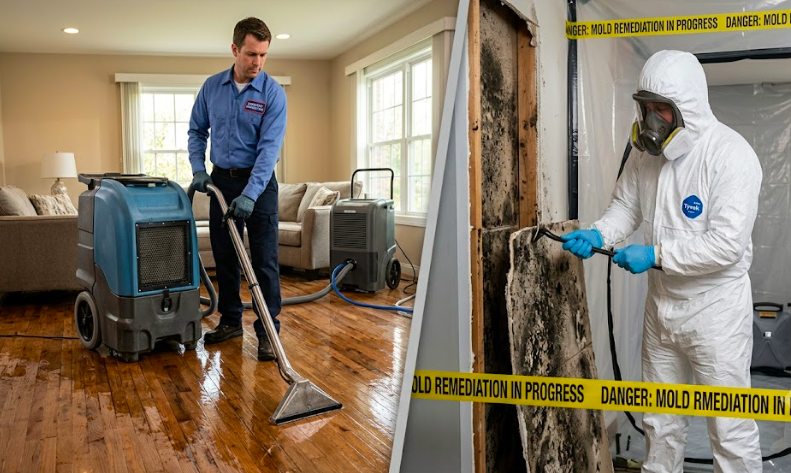
When disaster hits your property whether it’s a burst pipe, a flood, a sewage backup, or something far more serious the phone calls start fast. You need help, and you need it now. But here’s where most homeowners get stuck: who exactly do you call?
Water damage restoration companies and hazard cleanup companies are not the same thing. They serve different functions, operate under different certifications, and handle different types of threats to your property and health. In some situations, you need one. In others, you need both in a very specific order.
This guide breaks down exactly what separates these two services, what each one covers, and how to know which one your situation calls for.
What Is Water Damage Restoration?
Water damage restoration is the professional process of removing water from a property, drying out the structure, and returning the building to its pre-loss condition. It is the immediate, emergency-phase response to unwanted water intrusion.
When a pipe bursts in your kitchen at 2 AM, when a roof leak soaks your ceiling after a storm, or when a washing machine hose fails and floods your laundry room a water damage restoration company is your first call.
The typical water damage restoration process follows these phases:
1. Inspection and moisture mapping: Certified technicians use moisture meters and infrared thermal imaging to find water you cannot see hidden inside walls, beneath flooring, and inside insulation cavities.
2. Water extraction: Industrial-grade pumps and extraction equipment remove standing water from the property as quickly as possible. Speed here matters: every hour water sits, it migrates further into building materials.
3. Structural drying and dehumidification: After extraction, high-powered air movers and low-grain refrigerant (LGR) dehumidifiers are set up to dry the structure not just the air, but the walls, subfloor, and framing itself. This process is monitored daily using moisture readings until the structure reaches acceptable dryness levels.
4. Cleaning and sanitizing: Affected surfaces are cleaned and treated to reduce bacteria, eliminate odors, and control contamination risk.
5. Documentation: Reputable restoration companies document every moisture reading, equipment placement, and drying cycle. This paperwork is critical for insurance claims.
Water damage restoration is largely governed by the IICRC S500 Standard for Professional Water Damage Restoration the industry consensus document that defines how each category and class of water damage should be handled. Homeowners looking for certified water damage professionals should always verify that their chosen company follows IICRC water damage standards.
What Is Hazard Cleanup?
Hazard cleanup also called hazmat cleanup, biohazard remediation, or environmental cleanup is a distinctly different discipline. Where water damage restoration focuses on moisture, structure, and drying, hazard cleanup focuses on identifying, containing, and safely removing materials that pose a direct health or safety threat.
Hazard cleanup covers a wide range of situations:
- Mold remediation – when mold growth has reached a level that requires containment, negative air pressure, and controlled removal rather than simple surface cleaning
- Biohazard cleanup – crime scenes, unattended deaths, trauma scenes, bloodborne pathogen exposure
- Sewage and black water cleanup – Category 3 water intrusion involving raw sewage or floodwater contaminated with pathogens
- Asbestos abatement – removal of asbestos-containing materials in older properties, particularly when those materials have been disturbed or damaged
- Lead abatement – removal of lead-based paint and related contaminated materials
- Chemical spills and hazardous waste – industrial or residential exposure to toxic substances
Hazard cleanup professionals operate under OSHA regulations, EPA guidelines, and Arizona state licensing requirements. Unlike general contractors or water restoration crews, hazmat technicians wear personal protective equipment, establish containment zones, operate under negative air pressure to prevent spore or contaminant migration, and dispose of hazardous waste through regulated channels.
Our hazard cleanup services in Phoenix cover the full range of environmental and biohazard threats from mold remediation and asbestos removal to crime scene cleanup and chemical decontamination.
The Core Difference: Urgency vs. Regulation
Here is the clearest way to think about these two services:
Water damage restoration is about urgency. The clock starts the moment water enters your property. Every hour of delay increases the area of saturation, raises the risk of mold, and deepens structural damage. The job is to stop the spread and dry the structure fast.
Hazard cleanup is about regulation. The primary concern is not speed it is safety, containment, and compliance. Hazmat technicians must follow strict protocols that govern how dangerous materials are handled, contained, and disposed of. Cutting corners here has legal and health consequences that extend far beyond the property itself.
When Do You Need Water Damage Restoration?
Call a water damage restoration company when:
- A pipe has burst, a fixture has failed, or an appliance has overflowed
- Your roof is leaking and ceilings or walls have absorbed moisture
- A storm has allowed rainwater to enter through windows, doors, or foundation cracks
- Your basement has flooded from groundwater intrusion
- You notice unexplained moisture, soft spots in flooring, or a musty odor that signals hidden water damage
- Your HVAC system has produced condensation that has saturated nearby materials
The key trigger: any time water has entered a structure, contacted building materials, and cannot be fully removed by basic drying within a few hours.
Do not wait to see if it dries on its own. Mold can begin growing within 24 to 48 hours of water exposure, and many materials drywall, insulation, wood framing, carpet padding absorb and retain moisture long after the surface feels dry.
When Do You Need Hazard Cleanup?
Call a hazard cleanup company when:
- Visible mold growth covers more than 10 square feet (EPA threshold for professional remediation)
- The water that entered your property was contaminated sewage backup, floodwater, or standing water of unknown origin
- A trauma event, unattended death, or crime scene has left biological materials behind
- Asbestos-containing materials (common in homes built before 1980) have been disturbed or damaged by water intrusion or renovation
- Chemical exposure has occurred on the property
- A mold inspection has confirmed active growth inside walls, under flooring, or in HVAC ductwork
The key trigger: any situation where a material on the property poses a regulatory, chemical, or biological health threat that requires trained personnel and specialized disposal procedures.
When Do You Need Both and in What Order?
This is the most important part of this guide, and it is the question most property owners get wrong.
Many situations require both services – but they must happen in sequence, not simultaneously.
Water damage restoration always comes first. Here is why: hazard cleanup professionals cannot safely work in a wet, actively moisture-saturated environment. The structural drying process must be completed, and moisture levels must reach acceptable thresholds, before containment, abatement, or remediation work can begin effectively. Attempting mold remediation in a structure that still has active moisture, for example, will fail because the moisture source is still feeding the problem.
The correct sequence is:
Step 1: Emergency water extraction and drying (Water Damage Restoration) – Stop the water source. Extract standing water. Set drying equipment. Monitor and document until the structure is dry.
Step 2: Post-drying assessment -Once the structure is dry, conduct a thorough inspection for mold, asbestos exposure, contamination, or other hazards that the water event may have created or uncovered.
Step 3: Hazard cleanup and remediation (if needed) – If the assessment reveals mold, contamination, asbestos, or biohazard conditions, bring in a certified hazard cleanup team to contain and remove those materials under proper protocols.
Step 4: Restoration and rebuild -Once the property is both dry and clear of hazards, structural repairs and cosmetic restoration can begin.
A Real-World Example: Gulf Coast Flood Damage
Consider what happens when a Gulf Coast property takes on significant flood water a scenario that is devastatingly common in hurricane-prone areas like Southwest Louisiana.
Floodwater enters the structure. It is not clean water. It carries sediment, bacteria, sewage, and chemical contaminants from roads, drainage systems, and neighboring properties. The water soaks into drywall, insulation, subfloor, and framing within hours.
The first call is to a water damage restoration company. In cities like Lake Charles, Louisiana which has endured back-to-back hurricane events and repeated major flooding local specialists like Lake Charles LA Water Damage provide emergency water extraction and structural drying specifically designed for Gulf Coast flood conditions. They extract the water, dry the structure, and document the moisture damage for insurance.
Once the structure is dry, the post-drying inspection often reveals mold growth, contamination from the Category 3 flood water, or disturbed asbestos in older building materials. That is when a hazard cleanup team steps in to address those specific threats under the appropriate regulatory framework.
The two services are partners in the recovery process not interchangeable alternatives.
How Insurance Treats These Two Services
Insurance coverage for water damage restoration and hazard cleanup often falls under different provisions of a homeowner’s policy, and understanding this distinction matters when filing a claim.
Water damage restoration extraction, drying, moisture documentation is typically covered under the water damage or sudden and accidental damage provisions of a standard homeowners policy, provided the source of damage qualifies.
Hazard cleanup costs mold remediation, biohazard removal, asbestos abatement may fall under separate riders, environmental coverage endorsements, or not be covered at all depending on the policy language and the cause of the contamination.
This is why documentation from your water damage restoration company is so critical before hazard cleanup begins. The moisture readings, drying logs, and damage assessments produced during restoration serve as the evidentiary foundation for any subsequent hazard remediation claim. Insurers need to see the sequence water event, restoration response, and then resulting hazard conditions clearly documented.
Choosing the Right Company for Each Phase
Not every restoration company does hazard cleanup, and not every hazard cleanup company does water damage restoration. Some companies do both but expertise in one does not guarantee expertise in the other.
When evaluating a water damage restoration company, look for:
- IICRC certification (Water Damage Restoration Technician, Applied Structural Drying)
- 24/7 emergency response capability
- Documented moisture monitoring with daily readings
- Insurance claim experience and documentation processes
When evaluating a hazard cleanup company, look for:
- Arizona ROC contractor license (for Phoenix-area work)
- OSHA compliance and demonstrated training records
- EPA certification for asbestos abatement (if applicable)
- Negative air pressure containment capability
- Licensed waste disposal partnerships
In Phoenix and the surrounding Valley communities, our team at Hazard Cleanup Phoenix holds the certifications and regulatory compliance credentials required to handle the full range of environmental and biohazard cleanup scenarios. We also maintain trusted referral relationships with water damage restoration specialists so that when your situation requires both services, we can help coordinate the right sequence of response.
Quick Reference: Water Damage Restoration vs. Hazard Cleanup
| Water Damage Restoration | Hazard Cleanup | |
|---|---|---|
| Primary focus | Moisture removal and structural drying | Hazardous material containment and removal |
| Timing | Immediate emergency response | After drying is complete (or as independent event) |
| Key certifications | IICRC S500, ASD | OSHA, EPA, Arizona ROC |
| Typical services | Extraction, drying, dehumidification, sanitizing | Mold remediation, asbestos abatement, biohazard cleanup |
| Insurance treatment | Water damage provision | Environmental/specialty provision |
| When both needed | Always first | Always second |
The Bottom Line
Water damage restoration and hazard cleanup are two distinct professional disciplines that protect your property and your health in different ways and at different phases of recovery. Knowing which one you need and in what order saves you time, money, and the very real risk of an incomplete recovery that leaves hidden hazards behind.
When water has entered your property, call a water damage restoration specialist first. Get the structure dry, get the damage documented, and get the assessment done. Then, if the damage has created or uncovered hazardous conditions, bring in a certified hazard cleanup team to handle what the water left behind.
If you are in the Phoenix area and facing a property emergency involving biohazardous materials, mold, asbestos, or any other environmental hazard, contact our team at Hazard Cleanup Phoenix. We respond 24/7, work with all major insurance carriers, and hold every certification required to make your property safe again.
Have questions about what service your situation requires? Contact our Phoenix hazard cleanup team for a free consultation and property assessment.
Leave a Reply