
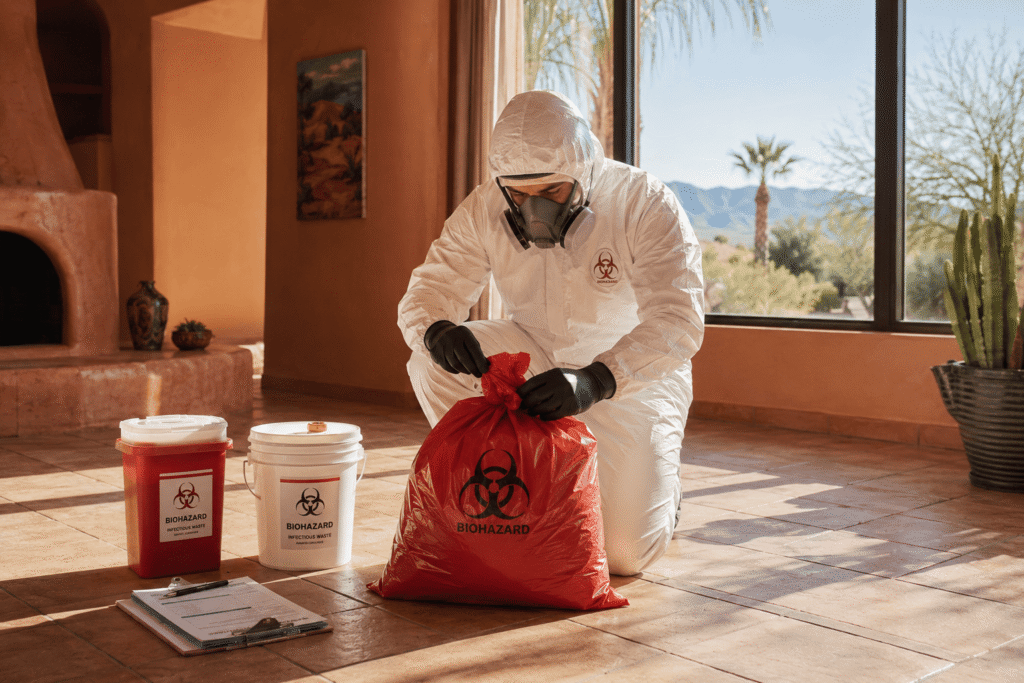
When a crime scene is released by law enforcement, most people assume the hardest part is over. In reality, the process of safely restoring a property is just beginning and one of the most legally complex and health-critical steps involves the proper disposal of biohazardous materials.
Phoenix presents a uniquely challenging environment for biohazard disposal. Temperatures regularly exceeding 110°F accelerate bacterial growth, intensify odors, and cause biological materials to break down faster than in other climates. In this desert setting, failure to comply with biohazard disposal regulations isn’t just a legal risk it’s a direct threat to public health.
At Hazard Cleanup Phoenix, we follow every layer of federal, state, and city regulation on every job. This guide is designed to help property owners, landlords, business owners, and anyone dealing with the aftermath of a crime scene in Phoenix understand exactly what those regulations require and what happens when they aren’t followed.
What Is Biohazardous Waste at a Crime Scene?
Before diving into the regulatory framework, it’s important to understand what qualifies as biohazardous waste in the context of a crime scene cleanup.
Under both OSHA and Arizona state definitions, biohazardous waste at crime scenes typically includes:
- Blood and bodily fluids — including pooled blood, blood-soaked materials, and any fluids that may carry pathogens
- Human tissues and organic matter — fragments of soft tissue, bone, or organ material
- Contaminated porous materials — carpet, drywall, upholstery, clothing, or wood saturated with blood or other potentially infectious materials (OPIM)
- Sharps — needles, syringes, broken glass, or any object contaminated with biological material
- Personal protective equipment (PPE) used during cleanup — gloves, Tyvek suits, respirators, and booties used by cleanup technicians
Each of these categories carries its own handling, packaging, transportation, and disposal requirements under applicable law.
The Three-Layer Regulatory Framework in Phoenix
Biohazard disposal in Phoenix operates under three simultaneous layers of law: federal regulations, Arizona state rules, and Phoenix city ordinances. Compliance requires meeting all three at once.
Layer 1: Federal Regulations OSHA and the EPA
OSHA Bloodborne Pathogens Standard (29 CFR 1910.1030)
The Occupational Safety and Health Administration’s Bloodborne Pathogens Standard is the foundational federal law governing biohazard handling. It applies to any person or business working with materials that may contain bloodborne pathogens such as HIV, Hepatitis B (HBV), and Hepatitis C (HCV).
Key OSHA requirements for crime scene biohazard disposal include:
- Exposure Control Plan: Any company performing crime scene cleanup must maintain a written Exposure Control Plan that outlines procedures for handling biohazardous materials, exposure incidents, and employee protections.
- Personal Protective Equipment (PPE): Workers must use appropriate PPE, including nitrile or latex gloves, eye protection, face shields, and fluid-resistant coveralls when in contact with potentially infectious materials. In high-risk scenes, full-body Tyvek suits and respirators are required.
- Engineering and Work Practice Controls: OSHA mandates specific work practices, such as prohibiting eating, drinking, or touching the face in contaminated areas, and requiring hand-washing immediately after PPE removal.
- Regulated Waste Disposal: Biohazardous waste must be placed in closeable, leak-proof containers or bags labeled with the universal biohazard symbol. Sharps must go into puncture-resistant sharps containers.
- Training: All employees involved in cleanup must receive documented annual training on bloodborne pathogen risks and proper handling procedures.
For OSHA’s official bloodborne pathogens guidance, visit: https://www.osha.gov/bloodborne-pathogens
EPA Regulations on Medical and Infectious Waste
The Environmental Protection Agency regulates the treatment and final disposal of medical waste a category that overlaps significantly with crime scene biohazardous waste. While the EPA does not directly regulate day-to-day handling (that falls to OSHA and state agencies), it governs:
- The treatment methods that must be applied before biohazardous waste can enter a solid waste landfill (typically incineration or autoclaving)
- The transportation of hazardous materials, particularly under the Resource Conservation and Recovery Act (RCRA)
- The protection of waterways and soil from contamination during disposal
In practice, this means biohazardous waste from a Phoenix crime scene cannot simply be put in a dumpster—it must undergo approved treatment before it reaches any waste facility.
Layer 2: Arizona State Regulations ADEQ and the Arizona Administrative Code
Arizona Department of Environmental Quality (ADEQ)
The Arizona Department of Environmental Quality is the primary state agency overseeing biohazardous waste management in Phoenix. ADEQ enforces rules that supplement and sometimes exceed federal requirements.
Under ADEQ rules, biohazardous medical waste generators and transporters must comply with the following:
- Transporter Licensing: Any company transporting biohazardous waste in Arizona must hold a valid ADEQ-issued transporter license. Operating without this license is a serious regulatory violation.
- Packaging and Labeling: Biohazardous waste must be double-bagged in red or orange leak-proof bags clearly marked with the biohazard symbol and the word “BIOHAZARD.” Rigid containers (such as sharps containers) must be puncture-resistant and properly sealed.
- Waste Tracking Documentation: A manifest or tracking document must accompany all biohazardous waste from the point of generation to the final disposal facility. This creates a documented chain of custody for regulatory audits.
- Storage Limits: Biohazardous waste cannot be stored on-site for more than 30 days (or 90 days in small quantities) before transportation to an approved disposal facility.
Arizona Administrative Code Title 18, Chapter 13, Article 14
This section of the Arizona Administrative Code provides the specific statutory definitions and technical requirements for biohazardous medical waste in the state. It details:
- The legal definition of “biohazardous medical waste” under Arizona law
- Approved treatment methods (incineration, autoclaving, chemical disinfection, or other ADEQ-approved technologies)
- Specific container specifications and labeling standards
- Documentation and record-keeping timelines (records must be retained for a minimum of three years)
Compliance with Title 18, Chapter 13, Article 14 is non-negotiable for any licensed biohazard cleanup company operating in Phoenix.
Layer 3: Phoenix City Ordinances Chapter 27 of the Phoenix City Code
At the local level, Chapter 27 of the Phoenix City Code governs solid waste management and includes specific provisions for biohazardous and special waste.
The most important local requirements include:
- Prohibition on Regular Trash Disposal: Biohazardous waste from crime scenes is explicitly prohibited from disposal in standard residential or commercial trash or dumpsters. Violations can result in significant fines.
- Licensed Waste Hauler Requirement: Property owners and businesses are required to contract with licensed waste haulers for biohazardous waste removal. Attempting to self-transport biohazardous waste without proper licensing is illegal under both city and state law.
- Penalties for Violations: Non-compliance with Chapter 27 provisions can result in civil fines, mandatory remediation orders, and in cases of willful violation, criminal charges.
For property managers, landlords, and business owners in Phoenix, this means you cannot legally handle crime scene cleanup on your own without proper licensing and equipment even on your own property.
The Step-by-Step Biohazard Disposal Process for Phoenix Crime Scenes
Understanding the regulatory framework is one thing; seeing how it applies to an actual crime scene cleanup is another. Here is how a fully compliant biohazard disposal process works in Phoenix:
Step 1: Scene Assessment and Biohazard Identification
Before any cleanup begins, a trained technician assesses the scene to identify all biohazardous materials present, determine the extent of contamination (including hidden contamination beneath flooring or inside walls), and develop a disposal plan that complies with all applicable regulations.
Step 2: PPE and Containment Setup
Technicians suit up in full PPE typically including Tyvek suits, N95 or higher respirators, nitrile gloves, boot covers, and eye protection. Affected areas are contained using physical barriers (plastic sheeting) and negative air pressure equipment to prevent cross-contamination.
Step 3: Collection and Packaging of Biohazardous Materials
All biohazardous waste is collected using appropriate tools (forceps, scoops, biohazard-rated bags) and placed into the correct containers:
- Soft waste (soaked materials, clothing, drywall) → double-bagged red or orange biohazard bags
- Sharps → sealed, puncture-resistant sharps containers
- Bulk liquid waste → sealed, leak-proof containers marked with the biohazard symbol
Step 4: Surface Decontamination
After physical waste is removed, all contaminated surfaces are treated with hospital-grade disinfectants that meet EPA-registered standards for bloodborne pathogens. This includes floors, walls, subflooring, and any structural components with confirmed contamination.
Step 5: Waste Transportation by Licensed Hauler
Packaged waste is transported by an ADEQ-licensed biohazardous waste hauler, with a complete manifest documenting the waste type, quantity, origin, and destination. The transport vehicle must be specifically equipped for biohazardous materials.
Step 6: Final Disposal at an Approved Facility
Biohazardous waste from Phoenix crime scenes is typically disposed of via incineration at a licensed medical waste incineration facility, or through autoclaving followed by regulated landfill disposal. The manifest is completed and retained for at least three years.
Step 7: Post-Cleanup Verification and Documentation
A compliant cleanup company provides documentation of the entire process for the property owner. This documentation is often required by insurance companies and can be requested by regulatory agencies in the event of an audit.
Why Phoenix’s Climate Makes Compliance Even More Critical
Phoenix’s desert heat is not merely inconvenient it actively accelerates the risks associated with improper biohazard handling. At temperatures above 100°F:
- Bacterial cultures in blood and biological material can double in population in as little as 20 minutes
- Decomposition accelerates dramatically, producing toxic gases and intensifying airborne health hazards
- Dried biological material can become aerosolized by wind or HVAC systems, spreading contamination to unaffected areas
- Porous materials like wood subflooring absorb liquid contaminants more deeply, making surface-only cleaning ineffective
This is why responding quickly and following proper disposal procedures is particularly urgent in the Phoenix Valley. Time delays in a hot climate are not just logistical problems they are public health emergencies.
Common Violations and Their Consequences
These are the most frequently cited violations in crime scene biohazard disposal in Arizona, and the consequences that follow:
Using regular trash bags and bins: Biohazardous waste disposed of in standard trash is an ADEQ violation and a Phoenix City Code violation. The property owner, not just the cleanup company, can be held liable.
Failing to use a licensed hauler: Transporting biohazardous waste without ADEQ transporter licensing can result in criminal charges under Arizona law.
Inadequate documentation: Missing or incomplete disposal manifests can trigger regulatory audits and result in substantial fines, even if the actual disposal was performed correctly.
Self-cleanup without proper training or PPE: Attempting to clean a biohazardous crime scene without OSHA-mandated training and PPE exposes the individual to bloodborne pathogen risks and potential civil liability if others become ill as a result of incomplete decontamination.
Mixing biohazardous waste with general waste: Combining biohazardous materials with regular construction debris or household trash is a violation at both the state and federal levels.
Who Is Responsible for Crime Scene Biohazard Cleanup in Phoenix?
This is one of the most common misconceptions about crime scene cleanup: many people believe the police or the city handles cleanup after a crime. They do not.
Law enforcement agencies including the Phoenix Police Department are responsible for investigating the scene and processing evidence. Once they release the property, cleanup responsibility falls entirely on the property owner. This applies to:
- Homeowners
- Landlords and property managers
- Business owners
- Commercial property managers
If you own or manage a property where a crime, trauma, or unattended death has occurred in Phoenix, you are legally and financially responsible for ensuring the biohazardous materials are properly removed and disposed of in compliance with all applicable regulations. Our crime scene cleanup service in Phoenix handles this entire process on your behalf, with full documentation for insurance and legal purposes.
Does Insurance Cover Biohazard Cleanup in Phoenix?
In most cases, yes homeowner’s insurance and commercial property insurance policies in Arizona cover professional biohazard cleanup as part of their property damage provisions. Some policies classify it under “vandalism and malicious mischief” coverage; others under general property damage.
The key to a successful insurance claim is proper documentation. A licensed cleanup company should provide you with:
- A detailed scope of work completed
- Itemized records of all biohazardous materials collected and disposed of
- Copies of waste manifests and disposal certifications
- Before-and-after photographs of the affected areas
Our insurance claim assistance service helps Phoenix property owners navigate the claims process to minimize out-of-pocket costs.
Services to Address Every Biohazard Disposal Need in Phoenix
At Hazard Cleanup Phoenix, our certified technicians are equipped to handle the full range of biohazardous situations that require compliant disposal:
- Crime Scene Cleanup – Full-service remediation and compliant disposal for all types of crime scenes throughout the Phoenix Valley
- Biohazard Waste Removal – Proper collection, packaging, transportation, and disposal of all categories of biohazardous waste under OSHA, EPA, and ADEQ standards
- OSHA Certified Decontamination – Full decontamination services performed by technicians trained and certified under OSHA’s bloodborne pathogens standard
We serve property owners across Phoenix and the surrounding Valley, including Scottsdale, Mesa, Chandler, Glendale, and all surrounding communities. Our team responds 24 hours a day, 7 days a week, every day of the year.
Frequently Asked Questions About Biohazard Disposal Regulations in Phoenix
Q: Can I clean up a crime scene on my own property by myself?
Legally, there is no statute in Arizona that prohibits a property owner from attempting their own cleanup. However, if you are not OSHA-trained, do not have proper PPE, and do not use an ADEQ-licensed hauler for the waste, you are in violation of multiple regulations and you expose yourself to serious health risks. Most insurance policies also require professional cleanup documentation to process a claim.
Q: How long after a crime scene is released do I have to complete cleanup?
There is no single statutory deadline in Arizona law, but ADEQ rules limit how long biohazardous waste can remain on-site once collected (30 days for most generators). Beyond the regulatory timeline, Phoenix’s heat makes delays dangerous biohazardous materials left in a hot property degrade rapidly and amplify health hazards for anyone who enters.
Q: What is the biohazard symbol requirement for waste containers?
Under both OSHA and ADEQ rules, all containers holding biohazardous waste must display the universal biohazard symbol (the three-lobed orange or red symbol) plus the word “BIOHAZARD” in a contrasting color. Containers must also be labeled with the generator’s name and address.
Q: Are crime scene cleanup costs tax deductible in Arizona?
In some circumstances, yes particularly for business properties. Consult a licensed Arizona CPA or tax attorney regarding deductibility under casualty loss or business expense provisions.
Q: Does the city of Phoenix provide any biohazard cleanup assistance?
The City of Phoenix does not provide residential biohazard cleanup services. Some victim assistance programs through the Arizona Attorney General’s Office may offer limited financial assistance to crime victims for cleanup costs. A licensed cleanup company can help you identify applicable assistance programs.
The Bottom Line: Compliance Is Not Optional in Phoenix
Biohazard disposal regulations for crime scenes in Phoenix exist for a clear and compelling reason: to protect the health of your family, your neighbors, and your community from serious, preventable disease exposure.
The regulatory framework—spanning OSHA’s bloodborne pathogen standard, EPA disposal requirements, ADEQ transporter and packaging rules, and Phoenix City Code Chapter 27 is comprehensive and strictly enforced. Violations carry real consequences, from civil fines to criminal liability.
The most effective way to ensure full compliance while protecting yourself, your family, and your property is to work with a licensed, certified professional biohazard cleanup company in Phoenix.
At Hazard Cleanup Phoenix, we handle every aspect of compliant biohazard disposal assessment, containment, collection, packaging, transportation, disposal, and documentation so you never have to worry about regulatory exposure during an already difficult time. We respond 24/7, work with your insurance company, and leave your property fully safe, decontaminated, and restored.
Call us anytime at (623) 777-8513 or request a free consultation online.
Leave a Reply