
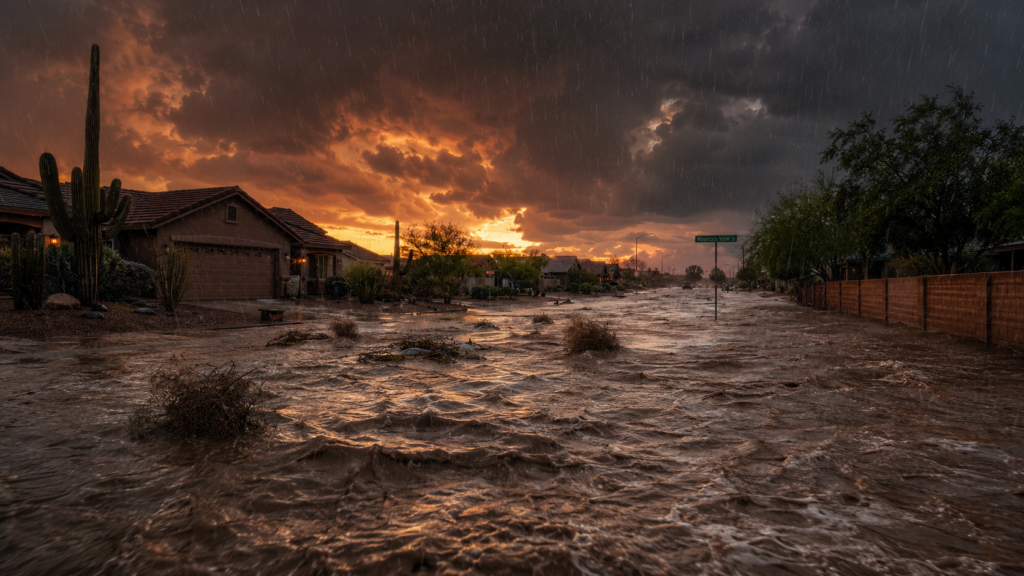
Every summer, the desert Southwest braces for monsoon season and every year, thousands of homeowners discover just how destructive a flash flood can be. Within minutes, dry washes fill with raging water, storm drains overflow, and streets become rivers. But the flooding itself is only the beginning. What’s left behind after the waters recede is often far more dangerous than the flood itself.
From Phoenix to surrounding communities, hazardous cleanup after a monsoon event is a complex, multi-step process that demands professional expertise. Whether you’re dealing with contaminated floodwater, hidden structural damage, or the silent threat of mold growth, understanding the risks is the first step toward a safe recovery.
What Happens During a Monsoon Flash Flood?
The Arizona monsoon season typically runs from June 15 through September 30, bringing intense, short-burst storms capable of dumping inches of rain within an hour. The desert’s sun-baked, hard-packed soil absorbs very little water, causing rapid surface runoff that turns ordinary roads and dry riverbeds into flash flood channels.
These floods carry more than just water. Monsoon floodwater is typically classified as Category 3 “black water” by restoration professionals meaning it’s heavily contaminated with:
- Raw sewage from overloaded sewer systems
- Agricultural and industrial chemicals washed from surrounding land
- Motor oil, gasoline, and other vehicle fluids from roadways
- Dead animals, insects, and biological debris
- Heavy silt, sediment, and debris
This contamination is why monsoon flood cleanup is not a DIY project. Coming into contact with floodwater without proper protective equipment can expose you to serious pathogens including E. coli, salmonella, hepatitis A, and leptospirosis.
The Hidden Hazards Left Behind After a Flash Flood
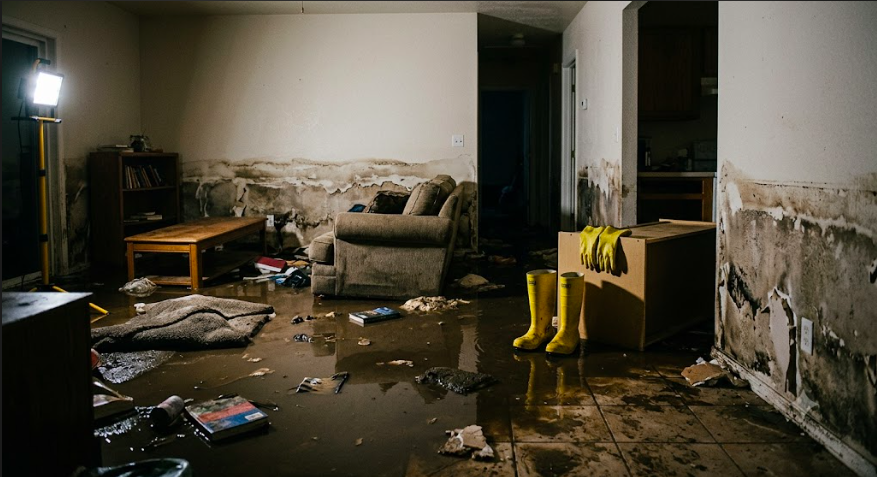
Once floodwaters recede, most homeowners focus on the visible damage soaked drywall, ruined furniture, muddy floors. But seasoned restoration professionals know the real dangers often lurk out of sight.
1. Structural Compromise
Floodwater saturates wood framing, subfloors, and wall cavities. Even after surfaces appear dry, structural components may remain wet for days or weeks silently warping, swelling, and weakening. In severe cases, compromised foundations and load-bearing walls create collapse risks. Before re-entering a flood-damaged structure, a professional assessment is critical.
2. Mold Growth Often Within 24–48 Hours
This is the hazard that catches the most homeowners off guard. In Arizona’s summer heat and humidity, mold colonies can begin forming on wet surfaces within 24 to 48 hours of a flood event. By the time you can see or smell mold, the infestation has often spread through wall cavities, under flooring, and into HVAC systems.
Mold exposure can trigger respiratory issues, allergic reactions, and in the case of black mold (Stachybotrys chartarum), serious long-term health complications. Professional mold remediation is the only safe solution for significant growth.
3. Electrical Hazards
Floodwater and electricity are a deadly combination. Even after water has receded, saturated walls and flooring can conduct electricity from damaged wiring, outlets, and appliances. Never enter a flood-damaged home without first having the power professionally disconnected. Electrocution is a leading cause of post-flood fatalities.
4. Gas Leaks
Monsoon flooding can damage or displace natural gas lines. If you smell gas near a flood-affected structure, do not enter evacuate immediately and call your gas utility provider.
5. Contaminated HVAC Systems
If floodwater enters your HVAC system or ductwork, contaminated air gets recirculated throughout your home every time the system runs. This can spread mold spores, bacteria, and chemical residues to every room in the house. HVAC inspection and cleaning is a non-negotiable step in any thorough restoration process.
Why Professional Water Damage Restoration Is Non-Negotiable
The temptation to handle flood cleanup yourself is understandable you want your home back to normal as quickly as possible. But the complexity and health risks involved in monsoon flood recovery make professional restoration essential, not optional.
A certified water damage restoration company brings:
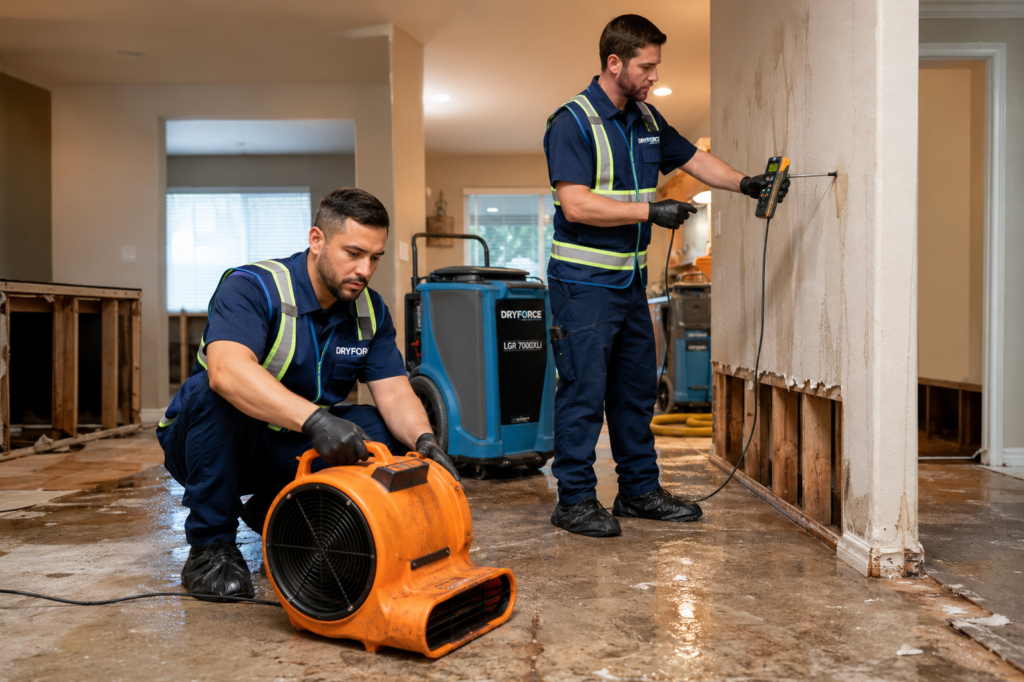
- Industrial-grade extraction equipment that removes water from deep within structural materials not just surfaces
- Thermal imaging cameras to detect hidden moisture pockets inside walls and under floors
- Commercial dehumidifiers and air movers calibrated to achieve proper drying standards
- Contamination protocols including personal protective equipment (PPE), containment zones, and antimicrobial treatments
- Documentation that supports your insurance claim
Our water damage restoration services follow IICRC S500 standards the industry benchmark for professional water damage remediation ensuring your home is genuinely safe, not just visually clean.
When Flooding Hits Beyond Arizona: Coastal and Gulf Communities Face Similar Challenges
Flash floods don’t discriminate by geography. Gulf Coast communities face their own version of this threat from tropical storms, hurricanes, and intense rainfall events that can devastate homes with little warning.
In regions like Southwest Louisiana, flooding is a year-round reality, not a seasonal one. That’s why communities along the Gulf rely on specialized local restoration professionals who understand regional building materials, climate conditions, and the unique contamination risks that come with coastal flooding.
If you’re in Southwest Louisiana dealing with storm or flood damage, Lake Charles LA Water Damage provides expert residential and commercial water damage restoration services tailored to the Gulf Coast environment from emergency water extraction to full structural drying and mold remediation. Their team understands the urgency that flood events demand and the professional thoroughness that lasting recovery requires.
The Step-by-Step Cleanup Process: What to Expect
Whether you’re in Phoenix recovering from a monsoon event or anywhere else dealing with flood aftermath, professional restoration follows a structured process:
Step 1: Safety Assessment
Professionals evaluate structural integrity, electrical hazards, gas lines, and contamination levels before any work begins.
Step 2: Water Extraction
Industrial submersible pumps and truck-mounted extractors remove standing water rapidly. Contaminated water is disposed of according to environmental regulations.
Step 3: Controlled Demolition (When Necessary)
Saturated drywall, insulation, and flooring that cannot be dried in place must be removed to prevent mold growth. This is called “flood cut” or selective demolition.
Step 4: Structural Drying
High-powered air movers and dehumidifiers run continuously often for 3–5 days to bring moisture levels in walls, subfloors, and framing back to safe ranges. Moisture readings are logged daily.
Step 5: Antimicrobial Treatment
All affected surfaces are treated with EPA-registered antimicrobial solutions to eliminate bacteria and prevent mold colonization.
Step 6: Mold Testing and Remediation
If mold is detected, a separate remediation protocol is initiated including containment, HEPA air filtration, removal of affected materials, and post-remediation testing.
Step 7: Reconstruction
Once the structure is certified dry and clean, rebuilding begins drywall, flooring, painting, and any structural repairs needed to restore your home.
Outbound Authority Resources
Understanding flood hazards and restoration standards is critical for homeowners. Here are three trusted national resources:
FEMA: Homeowner’s Guide to Retrofitting
The Federal Emergency Management Agency (FEMA) offers comprehensive guidance on flood risk, mitigation strategies, and post-disaster recovery for homeowners. FEMA Flood Recovery Resources (Dofollow National Authority | Government)
IICRC: Water Damage Restoration Standards
The Institute of Inspection, Cleaning and Restoration Certification (IICRC) sets the professional standards used by legitimate restoration companies, including the S500 Standard for Water Damage Restoration. IICRC Standards & Certification (Dofollow Industry Authority | National)
CDC: Flood Cleanup Health & Safety
The Centers for Disease Control and Prevention provides evidence-based health and safety guidance for people returning to flood-damaged homes including contamination risks and protective measures. CDC Flood Cleanup Safety Guidelines (Dofollow National Health Authority)
What to Do Right Now If You’ve Been Flooded
Before help arrives, take these immediate steps (only if it’s safe to do so):
Do NOT enter the structure until authorities confirm it’s structurally safe Document everything take photos and video of all damage before touching anything Call your insurance company to report the loss and begin your claim Contact a licensed restoration company immediately the first 24–48 hours are critical Turn off power at the main breaker (only if it’s safe and the panel is not in a flooded area) Do NOT run your HVAC if it may have been exposed to floodwater
And review our complete post-flood safety checklist before you take any action inside your home.
Final Thoughts: Speed and Expertise Are Everything
Monsoon season reminds us every year that nature doesn’t wait and neither should you when your home floods. The longer water sits, the deeper it penetrates, the more mold it feeds, and the more structural damage it causes. Every hour counts.
Whether you’re in the Phoenix metro area dealing with monsoon flash flooding, or you know someone on the Gulf Coast facing storm surge and tropical rainfall, the message is the same: professional water damage restoration isn’t a luxury it’s the difference between a full recovery and a long-term health and structural nightmare.
Our team at Hazard Cleanup Phoenix is available 24/7 for emergency response. Call us the moment the waters recede we’ll handle the rest.
Leave a Reply