
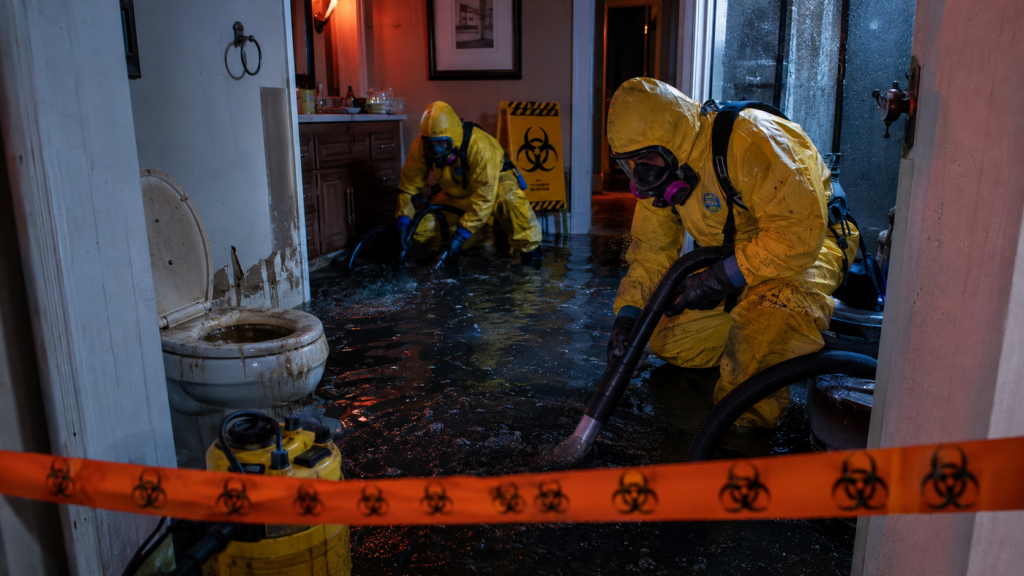
When raw sewage backs up into your home or commercial property, you’re not dealing with just a water damage problem you’re dealing with a full-scale biohazard emergency. Understanding this critical overlap is what separates a safe, thorough cleanup from one that leaves your family or customers at serious health risk.
At Hazard Cleanup Phoenix, we specialize in exactly this intersection where conventional water damage restoration ends and specialized biohazard remediation begins. In this guide, we’ll walk you through what sewage backup really involves, why standard cleanup methods fall short, and how professional remediation protects both your property and your health.
What Makes Sewage Backup Different from Ordinary Water Damage?
Not all water damage is equal. The restoration industry classifies water intrusion into three categories and sewage backup sits at the most dangerous level.
| Water Category | Source | Biohazard Risk | Cleanup Type |
|---|---|---|---|
| Category 1 Clean Water | Burst pipes, supply lines | Low | Standard water restoration |
| Category 2 Grey Water | Washing machine overflow, dishwasher | Moderate | Enhanced restoration + sanitization |
| Category 3 Black Water | Sewage backup, floodwater, toilet overflow | Severe Biohazard | Full biohazard remediation required |
Sewage referred to as “Category 3” or “black water” contains raw fecal matter, urine, bacteria (E. coli, Salmonella), viruses (Hepatitis A, Norovirus), and parasites. These pathogens don’t disappear when the water dries. They linger in porous materials carpet, drywall, subflooring, and insulation long after the visible moisture is gone.
Important Health Warning-Even brief exposure to sewage-contaminated water or surfaces can cause severe gastrointestinal illness, skin infections, respiratory issues, and in vulnerable individuals, life-threatening complications. Never attempt to clean sewage backup without professional-grade PPE and training.
The Dual Nature of Sewage Cleanup: Water Damage + Biohazard
This is the core challenge that most property owners and even some general contractors underestimate. A sewage backup event requires expertise from two distinct disciplines simultaneously:
1. Water Damage Restoration
The structural and moisture component must be addressed with the same rigor as any major flooding event. This includes rapid water extraction, thorough drying of structural materials, humidity monitoring, and preventing secondary mold growth which can begin within 24 to 48 hours in Phoenix’s climate.
This aspect of the process mirrors what professional teams handle in other high-moisture regions of the country. For instance, water damage restoration experts in Akron, OH routinely manage flooding and structural drying in older building stock the same technical protocols for moisture mapping, drying equipment, and structural assessment apply directly to sewage-impacted properties in Phoenix.
2. Biohazard Remediation
Simultaneously, every contaminated surface must be treated as a biohazard zone. This requires hospital-grade disinfectants (EPA-registered antimicrobials), containment protocols to prevent cross-contamination, safe disposal of porous materials that cannot be adequately sanitized, and proper handling of contaminated waste under local health codes.
Why This Matters-A company that handles only water damage may dry out your property efficiently but leave behind invisible pathogens in walls and floors. A biohazard company without water damage expertise may miss hidden moisture pockets that fuel mold growth weeks later. You need a team certified in both.
Step-by-Step: How Professional Sewage Backup Cleanup Works
- Emergency Assessment & Site Securing-Technicians arrive in full PPE, assess the scope of contamination, identify the source (main line blockage, municipal backup, pipe failure), and establish containment barriers to prevent spread to unaffected areas.
- Sewage Extraction & Solid Waste Removal-Industrial wet vacuums and truck-mounted extraction units remove standing sewage. Solid waste is bagged and disposed of per biohazard waste regulations not standard trash disposal.
- Structural Material Evaluation-Drywall, baseboards, flooring, and insulation within the contamination zone are inspected. Porous materials that have been saturated with black water are typically removed and safely discarded they cannot be reliably disinfected.
- EPA-Registered Antimicrobial Application-All hard surfaces, framing, and concrete subfloors are treated with commercial-grade disinfectants that kill bacteria, viruses, and fungi. This step often requires dwell time and may be repeated.
- Industrial Drying & Dehumidification-Air movers, dehumidifiers, and desiccant systems run continuously often for several days to bring moisture levels in structural materials to safe baselines. Moisture mapping confirms drying progress.
- Mold Prevention & Air Quality Treatment-HEPA air scrubbers remove airborne contaminants. If drying was delayed or incomplete mold growth is detected, targeted mold remediation is initiated before reconstruction.
- Clearance Testing & Documentation-Post-remediation verification confirms that pathogen levels and moisture readings are within safe limits critical for insurance claims and peace of mind before any reconstruction begins.
- Reconstruction & Restoration-Once clearance is achieved, the property is rebuilt new drywall, flooring, and structural repairs restoring it to pre-loss condition.
Health Risks You Cannot Afford to Ignore
The pathogens present in raw sewage are not neutralized by drying alone. Here is what residents and workers face when sewage contamination is inadequately addressed:
- Bacterial infections from E. coli, Salmonella, Leptospira, and Campylobacter
- Viral exposure including Hepatitis A, Rotavirus, and Norovirus all of which can survive on surfaces for days to weeks
- Parasitic infections such as Cryptosporidium and Giardia from contact with contaminated water
- Respiratory issues from airborne mold spores developing in inadequately dried cavities
- Chemical exposure from hydrogen sulfide and methane gases trapped in sewage
- Long-term structural compromise from mold colonization of untreated framing and subfloors
Who Is Most at Risk-Children under five, elderly adults, pregnant women, and immunocompromised individuals face significantly higher risk of serious illness from sewage pathogen exposure. Evacuation of these individuals during remediation is strongly recommended.
Why Phoenix Properties Face Unique Sewage Backup Risks
Phoenix presents a distinctive set of risk factors that increase both the frequency and severity of sewage backup events:
Aging Municipal Infrastructure
Significant portions of Phoenix’s sewer system date back several decades. Aging clay and cast-iron pipes are susceptible to root intrusion from desert vegetation like mesquite and fig trees a leading cause of residential sewage backups in the Valley.
Monsoon Season Surges
Arizona’s summer monsoon season (June through September) brings intense, rapid rainfall that can overwhelm municipal storm and sewer systems simultaneously, forcing sewage back through residential floor drains and toilets.
Rapid Microbial Growth in Desert Heat
Phoenix’s extreme summer temperatures regularly exceeding 110°F dramatically accelerate bacterial and mold growth in sewage-contaminated materials. What might take 48 hours to develop into a serious mold problem in a cooler climate can occur within hours here.
Slab-on-Grade Construction
The majority of Phoenix-area homes are built on concrete slabs with plumbing embedded below. Sewage line failures beneath the slab can contaminate the soil and concrete itself, requiring specialized extraction and treatment methods not needed in basement-heavy markets.
Sewage Cleanup & Water Damage: Lessons from Across the Country
Water damage and biohazard remediation don’t follow regional boundaries the underlying science is universal. Professionals who restore properties after flooding in the Midwest apply the same moisture management principles as Phoenix teams dealing with monsoon-related backups.
Reviewing how established restoration firms in markets like Ohio approach complex water intrusion events provides useful benchmarks for property owners everywhere. The professional water damage restoration services available in Akron, Ohio demonstrate the kind of integrated approach combining extraction, structural drying, and antimicrobial treatment that is equally essential in Phoenix sewage backup scenarios.
The key takeaway for Phoenix homeowners: demand a remediation company that can document certification in both IICRC water damage restoration (WRT/ASD credentials) and biohazard remediation not just one or the other.
What to Do Immediately After a Sewage Backup
- Evacuate the affected area immediately do not walk through sewage water
- Turn off electricity to the affected zone at the breaker if it is safe to do so
- Do not run HVAC systems, which can spread airborne contaminants throughout the property
- Call a certified biohazard and water damage restoration professional not a general plumber or handyman
- Contact your homeowner’s insurance company to initiate a claim and document damage with photos if safely possible
- Keep children, pets, and vulnerable individuals out of the property until clearance is given by remediation professionals
- Do not attempt to clean sewage with household bleach it does not neutralize all pathogens and creates harmful fumes
Insurance Tip-Most standard homeowner’s insurance policies do not automatically cover sewage backup damage it typically requires a specific sewage backup rider or endorsement. Review your policy now, before an event occurs. Professional documentation from a certified remediator is essential for claim approval.
Frequently Asked Questions
How long does sewage backup cleanup take in Phoenix?
Depending on the severity and scope, professional remediation typically takes 3 to 7 days for extraction, drying, and disinfection. Reconstruction adds additional time. Phoenix’s heat can accelerate the drying phase but also demands faster response to prevent rapid mold development.
Can I stay in my home during sewage backup remediation?
In most cases involving Category 3 sewage contamination, temporary relocation is strongly recommended, particularly for households with children, elderly individuals, or immunocompromised persons. Your remediation team will advise based on the specific scope of contamination.
Will my flooring and drywall need to be replaced?
Porous materials such as carpet, carpet padding, drywall below the flood line, and insulation that have been contaminated with black water almost always require removal and disposal. Hard, non-porous surfaces like tile can often be disinfected and retained.
Is sewage backup covered by homeowner’s insurance in Arizona?
Standard homeowner’s policies typically exclude sewage backup unless you carry a specific endorsement or rider. Some policies cover the resulting water damage but not biohazard remediation costs. Review your policy carefully and contact your insurer immediately after any sewage event.
What certifications should I look for in a sewage cleanup company?
Look for IICRC certification in Water Damage Restoration (WRT), Applied Structural Drying (ASD), and ideally biohazard or trauma scene cleanup certification. Arizona also requires appropriate contractor licensing. Always verify credentials before hiring.
Phoenix’s Certified Sewage Backup & Biohazard Specialists
Don’t let a sewage backup put your family’s health at risk. Hazard Cleanup Phoenix provides 24/7 emergency response combining certified water damage restoration and full biohazard remediation the complete solution your property needs.Get Emergency Help Now →
Leave a Reply