
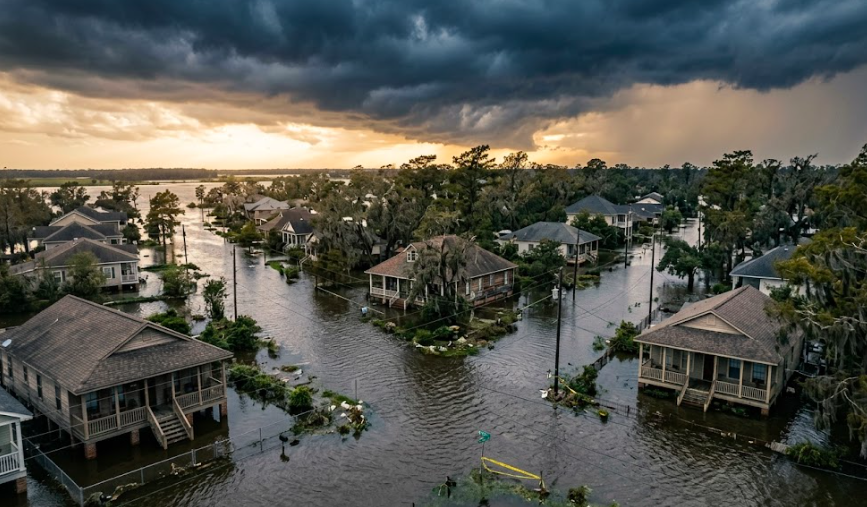
Phoenix gets its harrowing flash floods during monsoon season. But travel east to Lake Charles, Louisiana, and the threat is amplified and prolonged. Every hurricane season, southwest Louisiana faces not just the immediate danger of storm surges and rising water, but the slow-burning hazard that follows: contaminated floodwater soaking into walls, floors, and HVAC systems while homeowners wait for the storm to pass.
At Hazard Cleanup Phoenix, we deal with aftermath every day. And what we’ve learned and what Gulf Coast residents often discover too late is that water damage restoration is one of the most technically complex and genuinely hazardous recovery jobs a property can face. This guide breaks down exactly why, and what Lake Charles homeowners should do before, during, and after a flood event.
48 hrsTime for mold to begin colonizing wet drywall
$46KAverage cost of water damage restoration per U.S. claim
5Major hurricanes to strike Lake Charles in the last 15 years
80%Of flood victims who underestimate hidden structural damage
Why Lake Charles Faces a Unique Water Damage Problem
Unlike the short-burst monsoon floods common in desert cities, Gulf Coast hurricane flooding comes in waves often multiple storm events in a single season. Lake Charles experienced back-to-back hurricanes Laura and Delta in 2020, followed by Ida in 2021. Each storm left behind a specific type of water intrusion that escalated the health and structural risks dramatically.
The city sits at the crossroads of several environmental factors that make cleanup especially dangerous:
Category 3–5 Storm Surges
Saltwater and Gulf sediment contaminate properties far beyond what standard water extraction equipment can handle.
Blackwater Contamination
Floodwater mixes with sewage overflows, industrial runoff, and agricultural chemicals from surrounding parishes.
Extreme Humidity & Heat
Louisiana’s subtropical climate accelerates mold growth, often producing toxic species within 24–48 hours post-flood.
Aging Housing Stock
Older homes may contain asbestos, lead paint, and outdated electrical that become critically dangerous once wet.
The Hidden Hazards Hiding Behind Floodwater
Here is the part most homeowners don’t find out until it’s too late: floodwater is almost never just water. Category 1 “clean water” events like a burst pipe are rare in a hurricane scenario. What Lake Charles residents typically face is Category 3 blackwater: water that has contacted sewage, chemicals, or other biological agents.
Exposure to blackwater presents serious health risks including E. coli, Hepatitis A, Leptospirosis, and Vibrio infections. According to the CDC’s official hurricane cleanup safety guidelines, residents should treat all floodwater as contaminated until proven otherwise a standard that most DIY cleanup efforts cannot safely meet.
“The water going out is almost always more dangerous than the water coming in. What it leaves behind in your walls, your crawlspace, your HVAC ducts is where the real emergency begins.”
Mold: The Slow-Moving Disaster
Louisiana’s heat and humidity create near-ideal conditions for mold. Stachybotrys chartarum commonly called black mold can establish colonies in wet drywall within 24 to 48 hours of water intrusion. Once it spreads behind walls and into insulation, surface-level cleaning is not just ineffective, it’s actively dangerous: disturbing mold without proper containment releases thousands of spores into the air.
The EPA’s guidelines on residential mold remediation are clear: any affected area larger than 10 square feet should be handled by a trained professional. A single hurricane flood event in Lake Charles can affect hundreds of square feet of wall and floor space.
Structural Integrity Risks
Water weakens the wood framing, OSB sheathing, and engineered lumber that modern homes rely on for structural support. What looks like cosmetic water damage on the surface — a warped floor, a bubbling wall can indicate serious load-bearing compromise beneath. Walking into a flooded structure without assessing this risk is one of the leading causes of post-hurricane injury.
DIY Cleanup vs. Professional Water Damage Restoration: Where the Line Is
There are things you can safely do on your own after a minor water event and there are scenarios where attempting it yourself puts your health and your home at serious risk. Here’s how to think about it honestly.
When DIY is reasonable:
- Clean water from a burst pipe, contained to one room, dried within 24 hours
- Small area (under 10 sq ft) with no porous materials (tile, sealed concrete) affected
- No signs of mold growth, structural damage, or sewage involvement
When you need a certified professional immediately:
- ✗Any hurricane or storm surge floodwater (always Category 3 blackwater)
- ✗Water has been standing for more than 24–48 hours
- ✗Musty odor, visible mold, or dark staining on walls or ceilings
- ✗Electrical panels, appliances, or outlets have been submerged
- ✗Damage extends to multiple rooms, floors, or the crawlspace/attic
- ✗Your home was built before 1980 (possible asbestos or lead paint risk)
The Professional Water Damage Restoration Process, Explained
If you’ve never had to call a water damage restoration company, you might not know what “restoration” actually entails. It’s far more than vacuuming up water and running a fan. A certified IICRC restoration team follows a structured process that addresses both the immediate emergency and the long-term health of the structure.
Emergency Contact & Rapid Response (Hour 0)
A certified team mobilizes within hours, not days. Every hour of delay increases mold risk and structural damage. Reputable companies operate 24/7 for exactly this reason.
Inspection & Water Damage Assessment
Using moisture meters, thermal imaging cameras, and structural assessment, technicians identify every pocket of hidden moisture in walls, under floors, behind cabinets that your eye cannot see.
Water Extraction
Industrial truck-mounted extractors remove thousands of gallons from a property. This equipment is categorically different from consumer wet-dry vacs and can access subfloor cavities and wall spaces.
Drying & Dehumidification
Commercial air movers and desiccant dehumidifiers run continuously often for 3–5 days targeting specific humidity levels verified by ongoing moisture readings, not guesswork.
Cleaning, Sanitizing & Mold Prevention
All affected surfaces are treated with EPA-registered antimicrobials. In blackwater events, contaminated materials (drywall, insulation, flooring) are safely removed, bagged, and disposed.
Restoration & Rebuilding
Once the structure is dry and certified clean, reconstruction begins drywall, flooring, paint, and any structural repairs needed to bring the home back to pre-loss condition.
Choosing a Water Damage Restoration Company in Lake Charles
After a major hurricane, Lake Charles sees an influx of out-of-state contractors some qualified, many not. Choosing the wrong company can mean incomplete drying, mold left behind walls, or costly repairs that fail inspection. Here’s what to look for:
- IICRC Certification: The Institute of Inspection, Cleaning and Restoration Certification is the industry standard. Ask for the technician’s certification number.
- Licensed & Insured in Louisiana: Louisiana requires contractors to hold a valid state license. Verify at the Louisiana State Licensing Board for Contractors.
- Written Scope of Work: Any reputable company provides a written assessment before work begins, not a verbal estimate.
- Insurance Claim Experience: Companies that work directly with insurance adjusters can reduce your out-of-pocket cost and paperwork burden significantly.
- Post-Drying Verification: Ask for moisture readings before and after to confirm the job is actually complete.
For Lake Charles and the surrounding Calcasieu Parish area, the team at Lake Charles LA Water Damage brings certified local expertise, rapid response, and full-service restoration from extraction through rebuild exactly the kind of end-to-end support that hurricane recovery demands.
Trusted National Resources for Flood Safety & Recovery
When preparing for or recovering from a flood event, these authoritative national resources are your most reliable reference points:
National Authority
FEMA Ready.gov Flood Preparedness
The official federal guide covering flood preparation, response, and recovery including checklists, insurance guidance, and disaster assistance programs.Visit ready.gov →
Health & Safety CDC Flood & Hurricane Health HazardsCDC guidance on floodwater contamination risks, safe cleanup practices, and when to seek medical attention after exposure to floodwater.Visit cdc.gov →
EnvironmentalEPA Mold Cleanup in Your HomeThe EPA’s comprehensive guide to identifying, containing, and safely removing mold and when professional remediation is required by safety standards.Visit epa.gov →
Flooding in Lake Charles? Don’t Wait.
Every hour matters. The certified team at Lake Charles LA Water Damage provides 24/7 emergency response for storm surge, hurricane flooding, and all categories of water damage across Calcasieu Parish.Call for Emergency Restoration Now →
Leave a Reply