
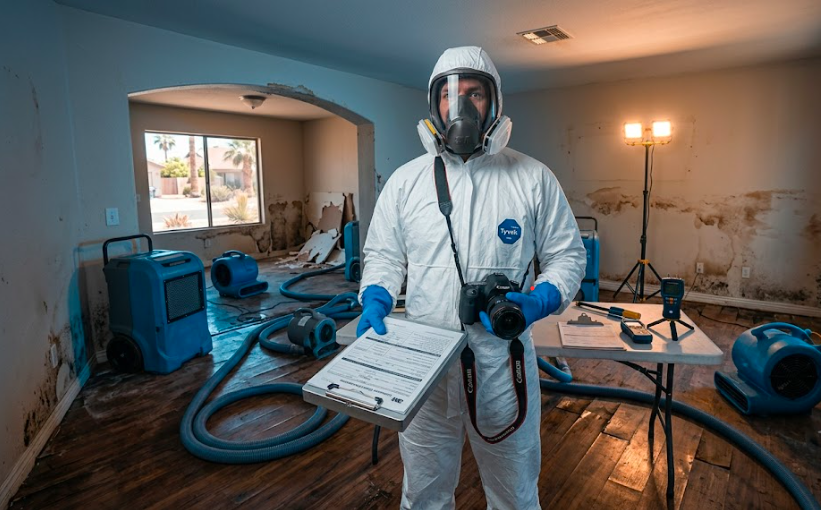
Dealing with biohazard contamination or water damage is already a traumatic experience and navigating the insurance claim process on top of it can feel completely overwhelming. Whether you’re managing the aftermath of a sewage backup, an unattended death, a flood event, or a burst pipe, knowing exactly how to file a claim can mean the difference between a full payout and a frustrating denial.
At Hazard Cleanup Phoenix, we’ve worked alongside hundreds of Phoenix-area homeowners and business owners through the claims process. This guide walks you through every step from the moment damage occurs to the final settlement check so you’re protected every step of the way.
Table of Contents
- Understand What Your Policy Covers
- Ensure Safety First – Before Doing Anything Else
- Document All Damage Thoroughly
- Notify Your Insurance Company Immediately
- Mitigate Further Damage (Without Overstepping)
- Hire a Licensed Biohazard or Water Damage Remediation Company
- Work With the Insurance Adjuster
- Submit Your Formal Claim & Required Documents
- Know Your Rights If Your Claim Is Denied or Underpaid
- FAQs
Step 1: Understand What Your Policy Covers
Before you pick up the phone, pull out your homeowner’s or commercial property insurance policy. Coverage for biohazard and water damage varies significantly between policies and providers.
Biohazard Coverage
Most standard homeowners’ policies do not automatically cover biohazard remediation. However, coverage may be available under:
- Additional “trauma scene cleanup” riders
- Sewer and drain backup endorsements
- Pollution liability clauses (for certain business policies)
- Crime scene cleanup coverage (in cases of violent crimes or unattended deaths)
Water Damage Coverage
Water damage is more commonly covered, but only under specific circumstances:
- Sudden and accidental water discharge (burst pipes, appliance failures)
- Storm-related water intrusion through damaged roofs or windows
- Sewage backup if you have an endorsed rider
Important:Flooding from external sources (overflowing rivers, flash floods) is typically excluded from standard homeowners’ policies. Flood coverage requires a separate policy through FEMA’s National Flood Insurance Program (NFIP) or a private flood insurer.
Step 2: Ensure Safety First Before Doing Anything Else
Your safety and the safety of others in the property must come before documentation, cleanup, or any calls. This is especially critical for biohazard situations.
Do Not Enter a Biohazard Area Without Protection:Exposure to blood, bodily fluids, sewage, or mold can cause serious illness. Do not attempt to clean or enter a severely contaminated area without proper PPE. Call a licensed biohazard remediation company immediately.
- Evacuate the affected area and keep others away
- Call emergency services (911) if a crime, death, or injury is involved
- Turn off water at the main shutoff if dealing with active water damage
- Turn off electricity to flooded areas to prevent electrocution
- Do not use fans or HVAC systems that could spread contaminants or mold spores
- Contact a professional remediation company before attempting any cleanup
Step 3: Document All Damage Thoroughly
Thorough documentation is the single most important thing you can do to protect your claim. Insufficient documentation is the #1 reason claims are underpaid or denied.
What to Capture
- Photos and videos of every affected room and surface shoot from multiple angles
- Close-up shots of visible contamination, water staining, or structural damage
- Timestamps on all photos (ensure your phone’s date/time is accurate)
- Serial numbers and model numbers of damaged appliances or equipment
- A written inventory list of all damaged personal property with estimated values
- Receipts, invoices, or credit card records for any high-value items
- Any relevant reports from police, fire department, or health authorities
Pro Tip:Back up all documentation to a cloud service (Google Drive, iCloud, Dropbox) immediately. If the damage continues or you’re displaced, you won’t lose access to your evidence.
Step 4: Notify Your Insurance Company Immediately
Most policies require you to report damage “promptly” or within a specific window (often 24–72 hours). Delayed reporting can give insurers grounds to reduce or deny your claim.
What to Tell Your Insurer
- Your policy number and full contact information
- Date, time, and cause of the damage (as specifically as possible)
- A description of the damage and affected areas
- Steps you’ve already taken to prevent further damage
- Contact information for any emergency services or professionals already on-site
Request a claim number immediately. Write down the name and direct contact of your claims representative. Every conversation should be followed by an email summary this creates a paper trail that protects you.
Don’t Make Recorded Statements Without Preparation:Insurers may ask for a recorded statement early in the process. You are generally not required to give one immediately. Consult a public adjuster or attorney first if the claim is large or complex.
Step 5: Mitigate Further Damage (Without Overstepping)
Your policy requires you to take reasonable steps to prevent additional damage but it also requires you to preserve evidence. This is a careful balance.
- Board up broken windows or damaged doors
- Place tarps over damaged roof sections
- Remove standing water only if it’s safe to do so
- Move undamaged belongings out of the affected area
- Keep all damaged materials on-site until the adjuster has inspected
Do Not Dispose of Damaged Materials Prematurely:Throwing away damaged items before the insurance adjuster inspects them can severely hurt your claim. Get written authorization from your insurer before removing or disposing of anything significant.
Step 6: Hire a Licensed Biohazard or Water Damage Remediation Company
This step is non-negotiable for biohazard situations and strongly recommended for significant water damage. Professional remediation companies do more than clean they provide detailed scope-of-work documents, industry-standard estimates, and certified completion reports that carry significant weight with insurance adjusters.
In Phoenix, AZ, Hazard Cleanup Phoenix provides full-service biohazard cleanup, trauma scene remediation, sewage backup cleanup, and water damage restoration all documented to meet insurance requirements.
Need water damage restoration services in Ohio?
If you’re dealing with water damage in the Akron, Ohio area, Akron OH Water Damage Restoration provides professional, certified water damage cleanup and structural drying services. Trusted by homeowners and businesses across Summit County.
What a Good Remediation Report Should Include
- Moisture readings and mapping of all affected areas
- Categorization of water damage (Category 1, 2, or 3)
- Classification of damage severity (Class 1–4)
- Itemized scope of work and line-item costs (using Xactimate or similar)
- Photos taken before, during, and after remediation
- Air quality and contamination test results (for biohazard situations)
- Clearance certification upon completion
Ask for Xactimate Estimates:Xactimate is the industry-standard software used by insurance adjusters to price restoration work. When your contractor uses the same system, there’s less room for insurers to undervalue your claim.
Step 7: Work With the Insurance Adjuster
Your insurer will assign an adjuster to inspect the damage and estimate the cost of repairs. This is one of the most critical stages of your claim and you have more power here than you may think.
During the Adjuster’s Visit
- Be present for the inspection – do not allow them to inspect without you
- Provide your own complete documentation package (photos, videos, inventory list)
- Have your remediation company’s representative present if possible
- Point out all damage, including hidden or secondary damage (mold potential, structural issues)
- Ask the adjuster to explain every line item in their estimate
- Do not agree to or sign anything on the spot
Consider Hiring a Public Adjuster
If your claim is large or complex, a public adjuster an independent licensed professional who represents you (not the insurance company) — can negotiate on your behalf. Studies consistently show that professionally represented claimants receive significantly higher settlements than those who navigate the process alone.
Step 8: Submit Your Formal Claim & Required Documents
Once you’ve gathered everything, it’s time to formally submit your claim. Most insurers have online portals, but you can also submit via certified mail to create a trackable paper trail.
Complete Insurance Claim Document Checklist
- Completed claim form (from your insurer)
- Proof of ownership for the property
- All timestamped photos and videos
- Damaged property inventory with estimated replacement values
- Receipts or purchase records for high-value items
- Police or incident report (if applicable)
- Emergency services report (fire department, health department, etc.)
- Professional remediation company’s scope-of-work and estimate
- Any temporary living expense receipts if displaced
- Contractor bids for any repair work
Learn more about water damage claim documentation:
The IICRC (Institute of Inspection, Cleaning and Restoration Certification) provides industry standards that guide proper documentation of water damage claims. Visit IICRC.org to understand S500 and S520 standards that your remediation company should follow and that your insurer recognizes.
Step 9: Know Your Rights If Your Claim Is Denied or Underpaid
A claim denial or a low settlement offer is not the end of the road. Arizona law and most state insurance regulations give you meaningful rights to challenge unfair decisions.
- Request the denial in writing with specific policy language cited
- File a formal written appeal with additional documentation
- Hire a public adjuster to negotiate a revised settlement
- Request an appraisal most policies include an appraisal clause for disputed amounts
- File a complaint with the Arizona Department of Insurance and Financial Institutions (DIFI)
- Consult an insurance bad faith attorney if the insurer is acting in bad faith
Arizona Policyholders Have Leverage:Arizona’s bad faith insurance laws (ARS § 20-461) protect policyholders from unreasonable claim denials. If your insurer refuses to pay a valid claim without reasonable cause, you may be entitled to damages beyond the policy amount.
Need Biohazard or Water Damage Cleanup in Phoenix?
We work directly with your insurance company, provide detailed Xactimate-compatible documentation, and handle the full remediation so you can focus on recovery, not paperwork. Get a Free Assessment → Call Now
Frequently Asked Questions
Does homeowners insurance cover biohazard cleanup?
It depends on your policy. Many standard policies exclude biohazard remediation, but endorsements for sewer backup, crime scene cleanup, or pollution can extend coverage. Review your policy carefully or call your agent to confirm what’s included.
How long do I have to file a water damage claim in Arizona?
Most policies require prompt reporting typically within 24 to 72 hours of discovering damage. However, the statute of limitations for insurance claims in Arizona is generally 6 years. Always report as quickly as possible to avoid coverage issues.
Can I clean up the damage myself to save money?
For minor, non-hazardous water damage, DIY may be acceptable. However, for sewage backups, mold, or any biohazard contamination, professional remediation is required both for safety and for your insurance claim to be taken seriously.
Will filing a water damage claim raise my insurance premiums?
Filing a claim can potentially affect your premiums or renewal terms. Discuss this with your agent before filing for minor damages you could cover out-of-pocket. For major losses, the payout typically far outweighs any premium increase.
What if the damage was caused by a neighbor or another party?
If a third party’s negligence caused the damage (e.g., a neighbor’s burst pipe flooding your unit), you may be able to file a claim through their liability insurance. Document everything and consult an attorney or public adjuster if needed.
Final Thoughts
Filing an insurance claim for biohazard or water damage doesn’t have to be a battle but it does require preparation, documentation, and a clear understanding of your rights as a policyholder. The steps outlined in this guide apply whether you’re dealing with a contaminated Phoenix property or a flooded home anywhere in the country.
If you’re located in the Phoenix metro area, the team at Hazard Cleanup Phoenix is here to help you through both the remediation and the claims process providing the professional documentation and certified cleanup services that maximize your chances of a successful insurance settlement.
Don’t face this alone. Reach out today for a free consultation.
Leave a Reply