
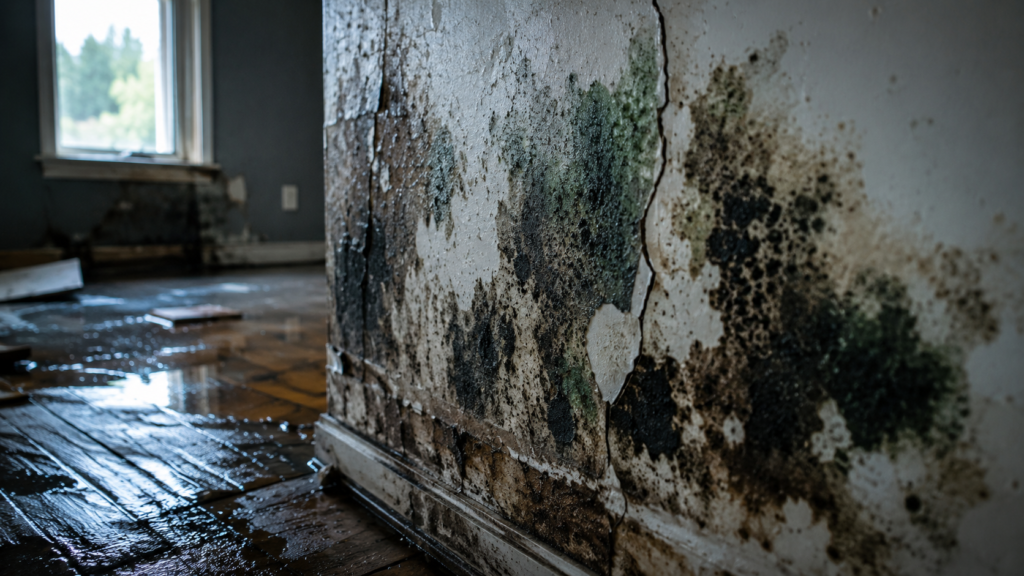
A flood is traumatic enough on its own but the damage doesn’t stop when the water recedes. Within hours of a flood event, a silent, invisible threat begins to take hold inside your walls, under your floors, and across your ceilings: mold.
Whether you experienced a burst pipe, a monsoon surge, or a full basement flood in the Phoenix metro area, mold growth is one of the most serious and fast-moving consequences you’ll face. Understanding what mold does to your health, how quickly it spreads, and when you need professional help can be the difference between a manageable remediation job and a full gut renovation.
Key Fact
The EPA and FEMA both confirm that mold can begin to grow on wet surfaces in as little as 24 to 48 hours after exposure to moisture even in Arizona’s dry climate.
What Is Post-Flood Mold and Why Does It Spread So Fast?
Mold is a naturally occurring fungus that reproduces by releasing microscopic spores into the air. These spores are everywhere in the air inside your home right now. Under normal, dry conditions, they’re harmless. But when moisture enters the picture, especially the sustained moisture left behind after a flood, spores find the perfect environment to colonize rapidly.
Flood water doesn’t just wet surfaces it saturates porous building materials like drywall, insulation, wood framing, carpet padding, and subfloor. These materials act like sponges, retaining moisture long after the visible water is gone. That trapped moisture is mold’s best friend.
Why Phoenix Homes Aren’t Immune
Many Phoenix homeowners assume Arizona’s desert heat protects them from mold. While the dry climate does reduce ambient moisture, flood events whether from summer monsoons, plumbing failures, or roof leaks introduce enough water to override that natural protection. Once mold gets started, interior conditions (darker spaces, enclosed walls, HVAC recirculation) can sustain it even when outdoor humidity is low.
Serious Health Risks of Flood Mold Exposure
Not all mold is equally dangerous, but any mold growing inside a living space poses real health concerns particularly for vulnerable populations. Here’s what you and your family may be exposed to:
1. Respiratory Irritation and Infections
Mold spores, when inhaled, irritate the airways and lungs. Prolonged exposure can cause persistent coughing, wheezing, chest tightness, and shortness of breath. People with asthma often experience severe flare-ups in mold-contaminated environments.
2. Allergic Reactions
Mold is one of the most common indoor allergens. Symptoms include sneezing, runny nose, itchy eyes, and skin rashes. These reactions can occur even in people who have never shown mold sensitivity before, especially after heavy exposure.
3. Toxic Mold (Stachybotrys chartarum)
Commonly known as “black mold,” Stachybotrys chartarum thrives in water-damaged cellulose-rich materials (drywall, wood). While the term “toxic mold” is sometimes overstated in media, mycotoxins produced by this species have been linked to more serious symptoms including neurological issues, chronic fatigue, and severe respiratory conditions.
4. High-Risk Individuals
The following groups face elevated risks from mold exposure:
- Children under 12 years old
- Adults over 65
- Individuals with asthma, COPD, or other lung conditions
- Immunocompromised individuals (chemotherapy, HIV, organ transplants)
- Pregnant women
- Anyone with known mold allergies
Warning
If anyone in your household develops unexplained respiratory symptoms, headaches, or skin irritation after a flood, seek medical attention promptly and vacate the property until mold is assessed by a professional.
The Mold Growth Timeline After a Flood
Time is your most critical resource when dealing with post-flood mold. Here’s exactly what’s happening inside your home after water intrusion:
Water Absorption Phase
Flood water penetrates porous materials drywall, insulation, wood, carpet. Surface water can be extracted, but absorbed moisture lingers deep inside walls and floors. Mold spores are already present; they’re just waiting for conditions to activate.
Mold Germination Begins
This is the critical window. If moisture is not actively extracted and the environment dried out within 48 hours, mold spores begin germinating on wet surfaces. Musty odors may not yet be detectable, but mold is already taking root invisibly inside wall cavities and under flooring.
Active Mold Colony Growth
By day three, mold colonies are actively growing. You may begin to notice dark spots on walls, a persistent musty smell, or visible surface discoloration. At this stage, the contamination typically extends well beyond what’s visible especially behind drywall and under baseboards.
Structural Penetration
After one to three weeks without remediation, mold penetrates deeply into structural materials. Wood framing begins to break down, drywall becomes unsalvageable, and the spore count in the air rises dramatically. Health symptoms in occupants typically begin or worsen during this phase.
Severe Structural Damage
Mold is now deeply embedded throughout building materials. At this stage, extensive demolition and replacement is often the only viable option. Structural integrity may be compromised. Professional industrial-grade remediation is absolutely necessary.
Pro Tip: The 48-Hour Rule
Industry professionals use the “48-hour rule” as a guiding principle: if all affected materials are thoroughly dried within 48 hours of water intrusion, mold growth can often be prevented entirely. Every hour beyond that window increases both the risk and the cost of remediation.
Can You Handle Post-Flood Mold Yourself?
The EPA allows homeowners to self-remediate mold if the affected area is less than 10 square feet (roughly a 3×3 foot patch) and the mold is on a non-porous, surface-level material. In those limited cases, protective gear and EPA-approved antifungal solutions may be sufficient.
However, post-flood mold rarely stays on surfaces. Flood conditions almost always result in:
- Mold growth inside wall cavities invisible until walls are opened
- Contamination spanning far more than 10 square feet
- Multiple mold species present simultaneously
- Compromised structural materials that must be replaced, not cleaned
- HVAC contamination spreading spores throughout the entire home
Attempting DIY remediation in these conditions without proper equipment (industrial air scrubbers, HEPA vacuums, containment barriers, negative air pressure) not only fails to solve the problem it can actively spread spores to unaffected areas of your home.
When to Call a Professional: Clear Warning Signs
If you’ve experienced a flood in your Phoenix home, err on the side of calling a professional. But these specific situations make professional remediation non-negotiable:
- Visible mold covering more than 10 square feet
- Mold is black, green, or slimy in texture
- Persistent musty odor even after drying
- Any mold visible on HVAC vents, ductwork, or air handlers
- Mold is growing on drywall, insulation, or structural wood
- Household members experiencing respiratory symptoms or allergic reactions
- Flooding involved sewage or “gray water” (contamination multiplies mold risk)
- More than 48 hours have passed since water intrusion without full drying
- You cannot identify the water source or confirm it’s been stopped
Water Damage Restoration Akron, Ohio
Flood cleanup requires acting fast regardless of where you are. If you’re in the Akron, Ohio area and need immediate water damage restoration, our trusted partners at Akron OH Water Damage Restoration provide certified emergency flood cleanup, water extraction, and structural drying services to prevent exactly the kind of mold growth described in this article.
What Professional Mold Remediation Actually Involves
Understanding what professionals do helps you recognize the limitations of DIY approaches. A certified mold remediation company like Hazard Cleanup Phoenix follows a strict, industry-standard protocol:
Step 1: Mold Inspection & Assessment
A certified inspector identifies all affected areas using moisture meters, thermal imaging, and air quality testing. This includes areas behind walls that aren’t visibly affected.
Step 2: Containment
Affected areas are sealed off using heavy plastic sheeting and negative air pressure systems to prevent spores from spreading to unaffected rooms during remediation.
Step 3: Air Filtration
Industrial HEPA air scrubbers and negative air machines are deployed to capture airborne spores and continuously filter the air throughout the remediation process.
Step 4: Removal of Contaminated Materials
Non-salvageable materials typically drywall, insulation, carpet, and sometimes wood framing are carefully removed, bagged, and disposed of per EPA and Arizona guidelines.
Step 5: Cleaning & Treatment
Remaining surfaces are treated with EPA-registered antimicrobial and antifungal agents. HEPA vacuuming removes settled spores from all surfaces.
Step 6: Drying & Moisture Control
Industrial dehumidifiers and air movers are used to bring moisture levels to safe thresholds before any reconstruction begins.
Step 7: Post-Remediation Verification
Air quality and surface testing confirm spore counts have returned to safe levels before the home is cleared for occupancy and reconstruction.
Authoritative Mold Guidance
For federal guidelines on mold in homes, the U.S. Environmental Protection Agency (EPA) — Mold Cleanup in Your Home provides comprehensive information on safe cleanup procedures, health guidance, and when to seek professional help. This is the industry-standard resource referenced by all certified remediation professionals.
Preventing Mold After a Flood: Immediate Steps You Can Take
While you wait for professional help or in the early hours after a flood these steps can reduce mold risk:
- Remove standing water as quickly as possible using pumps or wet vacuums
- Open windows and run fans to increase air circulation (only if outdoor humidity is low)
- Remove wet rugs, furniture, and soft goods from the home
- Do NOT run central HVAC it can spread spores to unaffected areas
- Document all damage thoroughly with photos and video for insurance purposes
- Avoid disturbing visible mold walking through it spreads spores
- Call a professional water damage and mold remediation company within 24–48 hours
Hazard Cleanup Phoenix Services
Hazard Cleanup Phoenix provides certified mold inspection, testing, and full remediation services across the Greater Phoenix metro area. Visit our homepage to learn more about our emergency response services, service areas, and how we can help you reclaim your home after a flood or water damage event.
Mold Claims & Insurance: What You Need to Know
Standard homeowners’ insurance policies are complex when it comes to mold. Coverage typically depends on the cause of the mold:
- Sudden water damage (burst pipe) usually covered
- Flood damage requires a separate flood insurance policy (NFIP or private)
- Long-term neglected moisture typically excluded
- Mold resulting from a covered water event often covered, but with dollar limits
Professional mold remediation companies can provide detailed documentation of the cause, extent, and scope of contamination that supports your insurance claim. Ask your remediation company about their experience working with insurance adjusters it can significantly reduce your out-of-pocket costs.
Don’t Wait Mold Gets Worse Every Hour
If you’ve experienced flooding in your Phoenix home, time is critical. Our certified mold remediation team is available 24/7 for emergency response across the Greater Phoenix area. Get a Free Mold Inspection
Frequently Asked Questions
How long does it take for mold to grow after a flood?
Mold can begin germinating within 24 to 48 hours of water intrusion. Visible mold colonies typically appear within 3 to 7 days if moisture is not fully eliminated.
Is it safe to stay in my home after a flood?
It depends on the extent of damage. For minor flooding that is quickly dried, short-term occupancy may be acceptable. For significant flooding especially involving sewage, large areas, or delays beyond 48 hours it is advisable to vacate until a professional assessment is completed.
Can mold grow inside walls without being visible?
Yes. This is one of the most dangerous aspects of post-flood mold. Mold commonly colonizes the interior of wall cavities, behind baseboards, under flooring, and inside HVAC systems long before it appears on any visible surface.
Does Phoenix’s dry climate prevent mold after a flood?
No. While low ambient humidity reduces some risk, the moisture introduced by flooding is sufficient to sustain mold growth in enclosed, interior spaces regardless of outdoor conditions.
How much does professional mold remediation cost in Phoenix?
Costs vary widely based on the size of the affected area, materials involved, and severity of contamination. Minor remediation may range from $500–$1,500, while extensive flood-related mold can cost $3,000–$15,000 or more. Insurance coverage can significantly offset these costs.
Leave a Reply